Meilleure plate-forme de forage de puits d'eau 2026
Bienvenue sur notre blog Nous sommes un fabricant professionnel de machines de construction, spécialisé dans les appareils de forage hautes performances, les chargeuses, et les équipements compacts pour les projets d'ingénierie mondiaux.
👉 Suivez-nous pour les dernières mises à jour et les informations sur le projet 👉 Contactez-nous pour des devis rapides et des solutions de machines personnalisées
Restez à l'écoute de notre blog pour plus d'informations sur l'industrie et d'expertise en ingénierie.
Table des matières
Principaux points à retenir
Répartition complète des types d’appareils de forage de puits d’eau pour le marché mondial 2026
Comparaison technique des systèmes hydrauliques, rotatifs, à circulation inverse et à chenilles
Données réelles sur les performances de forage, capacité de profondeur et références d’efficacité
Normes industrielles (ISO, API, ASTM) appliquées à la sélection des équipements de forage
Structure des coûts, analyse du retour sur investissement et stratégie de maintenance du cycle de vie
Cas d'ingénierie du monde réel issus de projets agricoles, municipaux et industriels
Questions courantes des acheteurs basées sur le comportement de recherche et les opérations sur le terrain
Cadre de sélection technique pour différentes conditions géologiques
Introduction
Un moderne appareil de forage de puits d'eau il ne s'agit plus seulement d'une machine de forage mécanique. Il s'agit d'un système d'ingénierie hydraulique entièrement intégré qui détermine directement l'efficacité du forage, la stabilité du forage et le coût total du projet.
Selon les rapports mondiaux sur les infrastructures hydrauliques de 2024 (World Bank Water Data & Engineering Construction Review), plus de 2,3 milliards de personnes dans le monde connaissent une pénurie saisonnière d’eau, : stimuler des investissements rapides dans les systèmes de forage des eaux souterraines.
Les principales conclusions techniques montrent :
Une sélection incorrecte de la plate-forme peut augmenter les coûts de forage 25%
Les systèmes de circulation inefficaces réduisent la vitesse de forage jusqu'à 35%
Les plates-formes hydrauliques avancées améliorent l'efficacité énergétique 20%
Une correspondance appropriée des plates-formes augmente la durée de vie des puits 5 ans
Cela fait de sélectionner le droit appareil de forage de puits d'eau une décision d'ingénierie critique plutôt qu'un simple choix d'approvisionnement.
Cadre standard mondial d’ingénierie pour les plates-formes de forage de puits d
Aperçu de la conformité ISO et industrie
Les équipements de forage modernes sont régis par de multiples normes d'ingénierie :
ISO 14688 classification So pour le forage géotechnique
ISO 22475 méthodes d'échantillonnage pour l'enquête souterraine
API Spec 7K exigences en matière d'équipement
ASTM D2113 procédures de forage et d'échantillonnage
EN 16228 exigences de sécurité pour les machines de forage
Pourquoi les normes sont importantes dans les projets de forage
Assure la sécurité structurelle du mât de plate-forme et du système hydraulique
Garantit le couple de forage et la cohérence de la profondeur
Améliore l'interopérabilité des tiges et des trépans de forage
Réduit le taux de défaillance opérationnelle dans les environnements difficiles
Classification technique des types de plates-formes de forage de puits d'eau (2026)
Les systèmes de forage modernes sont classés en fonction de méthode de circulation, mobilité et capacité en profondeur.
Carburant + entretien + usure du foret + temps d'arrêt
Les plates-formes à circulation inverse réduisent le TCO de 1530% dans des projets de grande envergure.
Études de cas de l'industrie (preuve d'ingénierie)
Cas 1 : Projet d'expansion agricole au Moyen-Orient
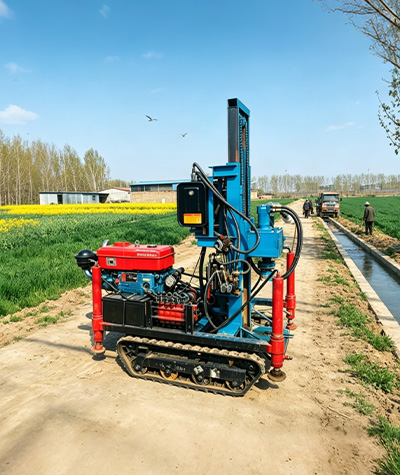
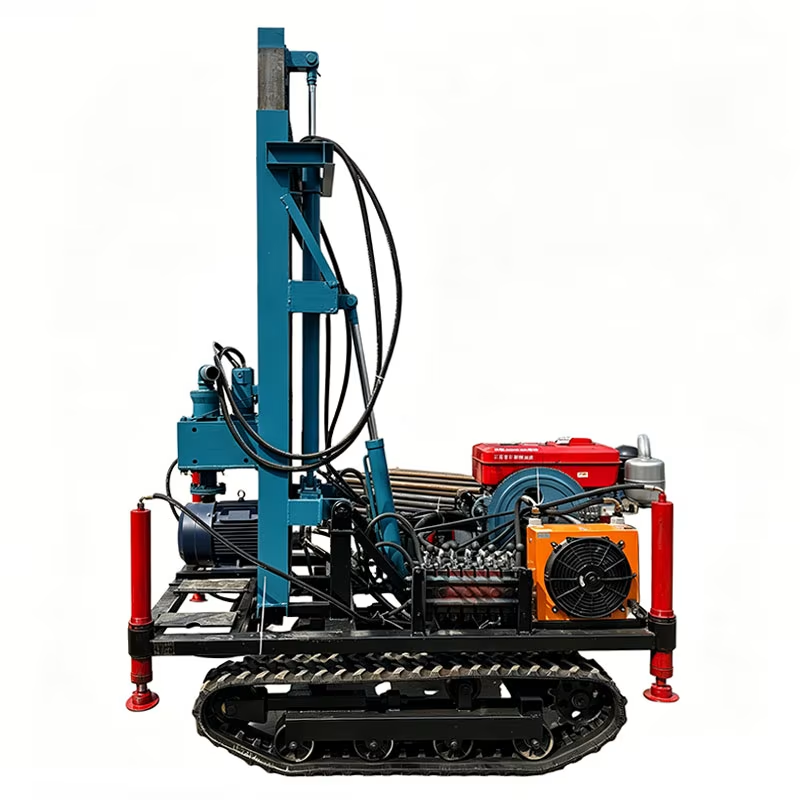
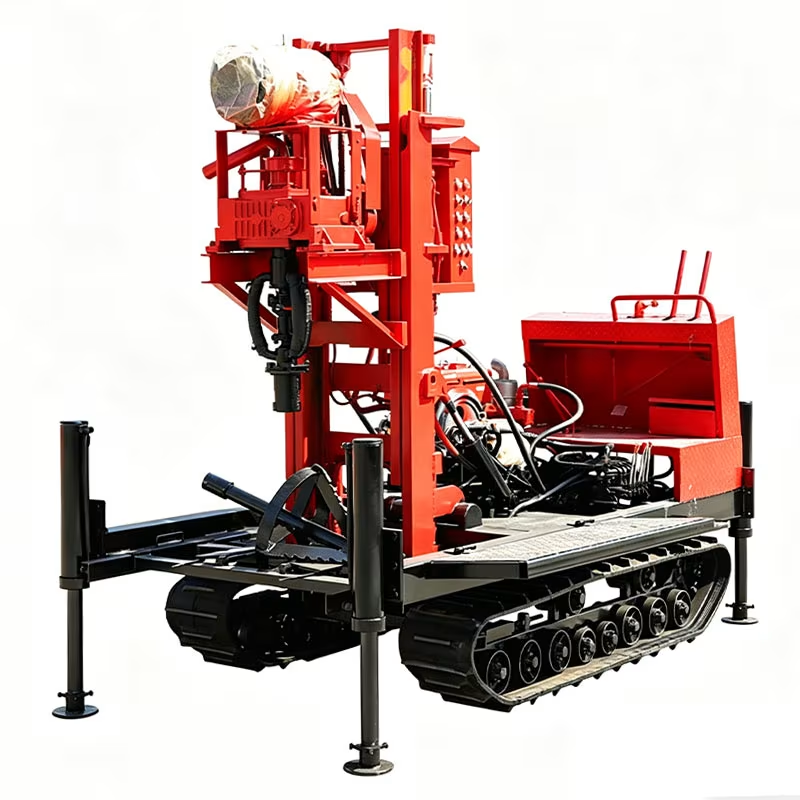
Plate-forme : Plate-forme de forage de puits d'eau montée sur chenilles
Sol : mélange sableux + argileux
Résultat : vitesse de forage 32% plus rapide
Cas 2 : Programme africain d'approvisionnement en eau en
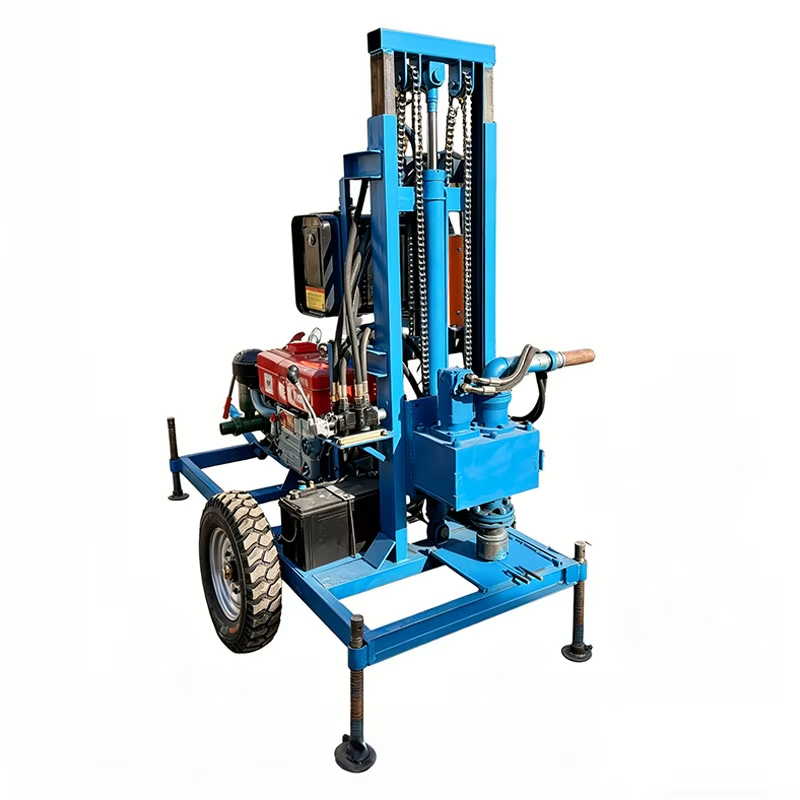
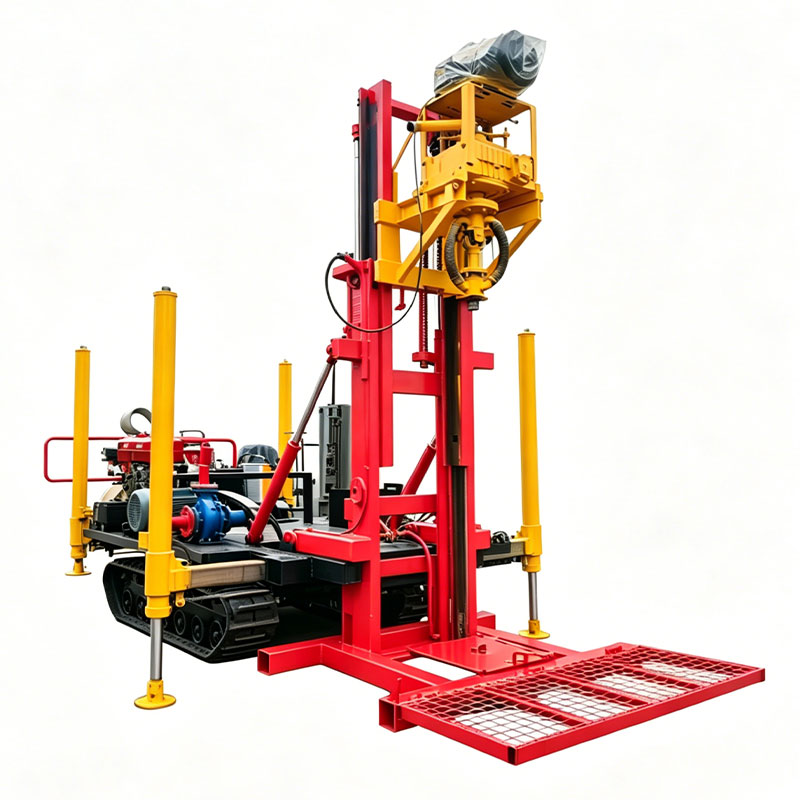
Gréement : Système hydraulique portable
Profondeur : 7 puits de 90 m
Résultat : réduction des coûts de 401TP6 T par puits
Cas 3 : Projet industriel en eau profonde (Asie 2023)
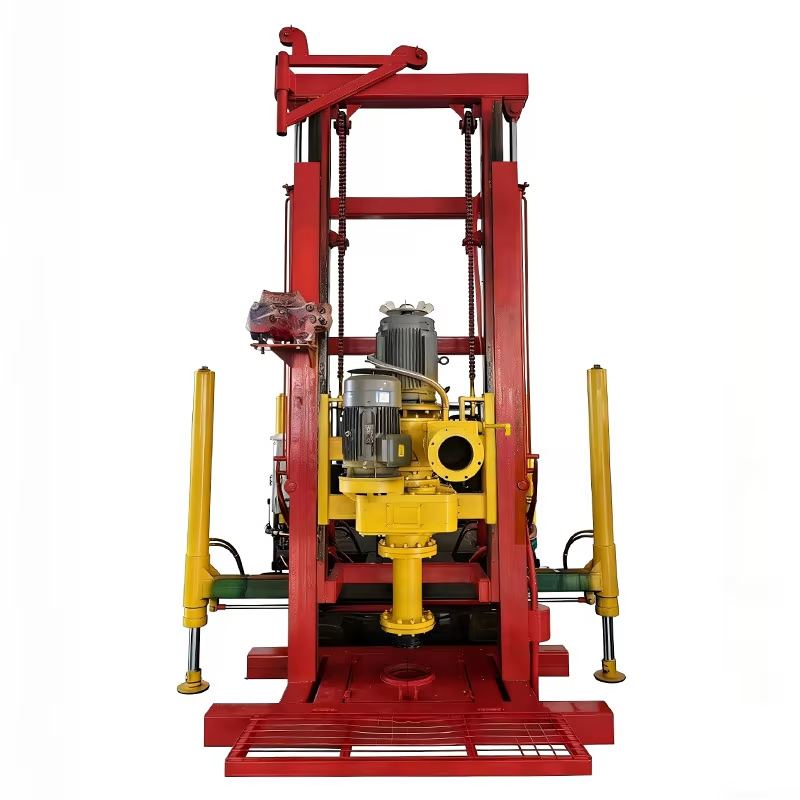
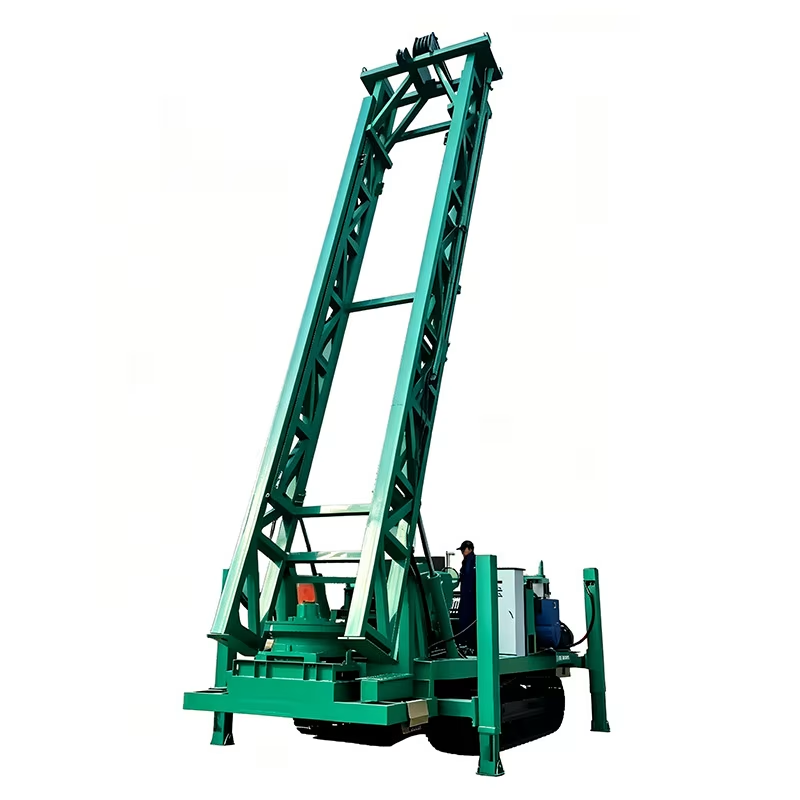
Gréement : Système de circulation inverse
Profondeur: 280m
Résultat : amélioration de l'efficacité 251TP6 T, effondrement zéro trou de forage
Actualités de l'industrie et tendances technologiques (Perspectives 2026)
Systèmes de forage hydraulique intelligents
Surveillance de la pression en temps réel
Optimisation du forage assistée par IA
Alertes de maintenance prédictives
Pompes hydrauliques économes en énergie
Réduisez la consommation de carburant jusqu'à 18%
Améliorer la stabilité du couple sous charge
Systèmes de plate-forme de forage modulaire
Remplacement facile du mât, de la pompe et de la tête rotative
Réduit les temps d'arrêt de 30%
Stratégie d'ingénierie de maintenance
Entretien du système hydraulique
Cycle de changement d'huile : 500 heures 800 heures
Calibrage de pression toutes les 200 heures
Contrôle du cycle de vie des forets
Durée de vie moyenne : 120400 mètres selon géologie
Inspection de fatigue structurelle
Inspection de soudage des mâts tous les 6 mois
Tests de charge annuels
Conclusion
Sélection de la droite appareil de forage de puits d'eau en 2026, il faut une combinaison de connaissances en ingénierie, d'analyse géologique et d'évaluation des coûts Avec les progrès des systèmes hydrauliques, de la technologie de circulation inverse et de la surveillance intelligente, les plates-formes modernes offrent une efficacité nettement plus élevée et des coûts opérationnels inférieurs à ceux des systèmes traditionnels.
Une plate-forme de forage scientifiquement adaptée peut réduire le coût total du projet 20 01TP6 T tout en améliorant les performances de forage et la stabilité du puits.