Entrer en contact
* Vos informations personnelles sont protégées en toute sécurité et ne seront utilisées qu'à des fins de communication d'entreprise.
Bienvenue sur notre blog Nous sommes un fabricant professionnel de machines de construction, spécialisé dans les appareils de forage hautes performances, les chargeuses, et les équipements compacts pour les projets d'ingénierie mondiaux.
👉 Suivez-nous pour les dernières mises à jour et les informations sur le projet
👉 Contactez-nous pour des devis rapides et des solutions de machines personnalisées
Restez à l'écoute de notre blog pour plus d'informations sur l'industrie et d'expertise en ingénierie.
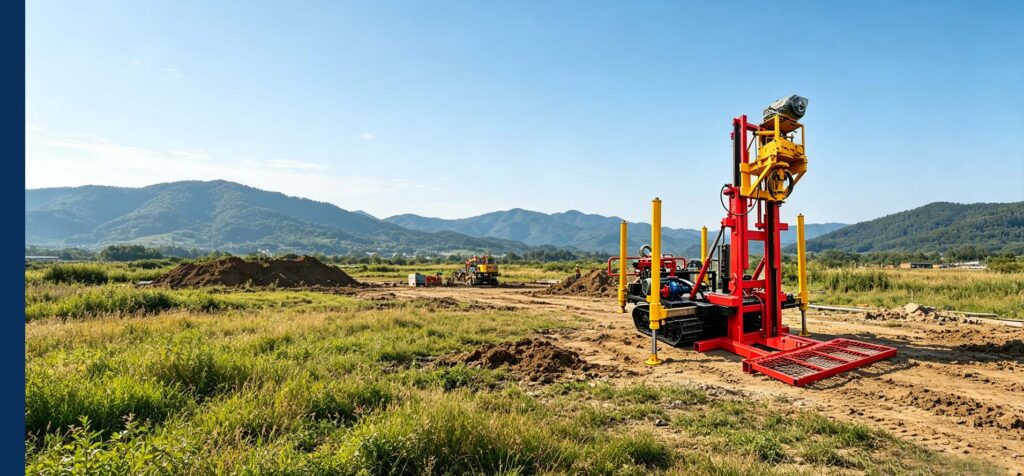
Access to reliable groundwater has become increasingly important for agriculture, rural development, construction projects, and industrial operations. Whether drilling a household water well, establishing an irrigation system, or constructing a dewatering well, selecting the right drilling equipment directly impacts project efficiency and operating costs.
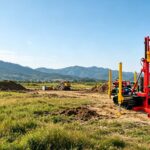
Among various drilling solutions available today, the track drill rig has become one of the most popular choices due to its excellent mobility, stability, and adaptability. Unlike truck-mounted units that require prepared roads and larger operating spaces, crawler-mounted drilling rigs can travel across muddy farmland, rocky terrain, slopes, and remote construction sites with ease.
Modern water well drilling equipment combines hydraulic technology, crawler mobility, intelligent controls, and efficient drilling methods to provide reliable performance in a wide range of geological formations. As groundwater demand continues to increase globally, track drill rigs have become essential equipment for drilling contractors, agricultural operators, and engineering companies.
This guide explains everything you need to know about track drill rigs for water well drilling, including their working principles, types, applications, technical specifications, selection criteria, and industry trends.
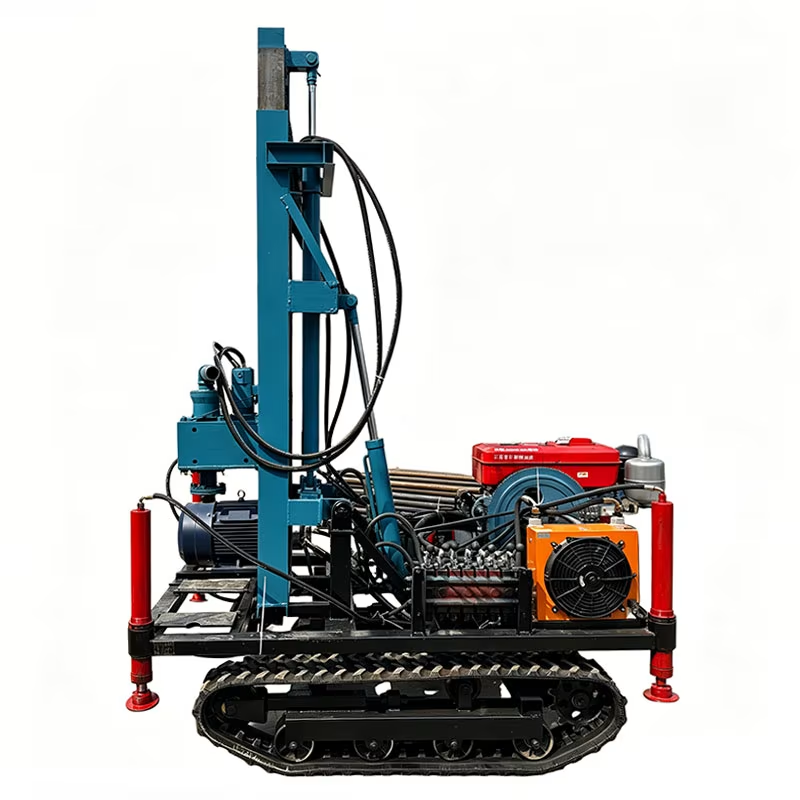
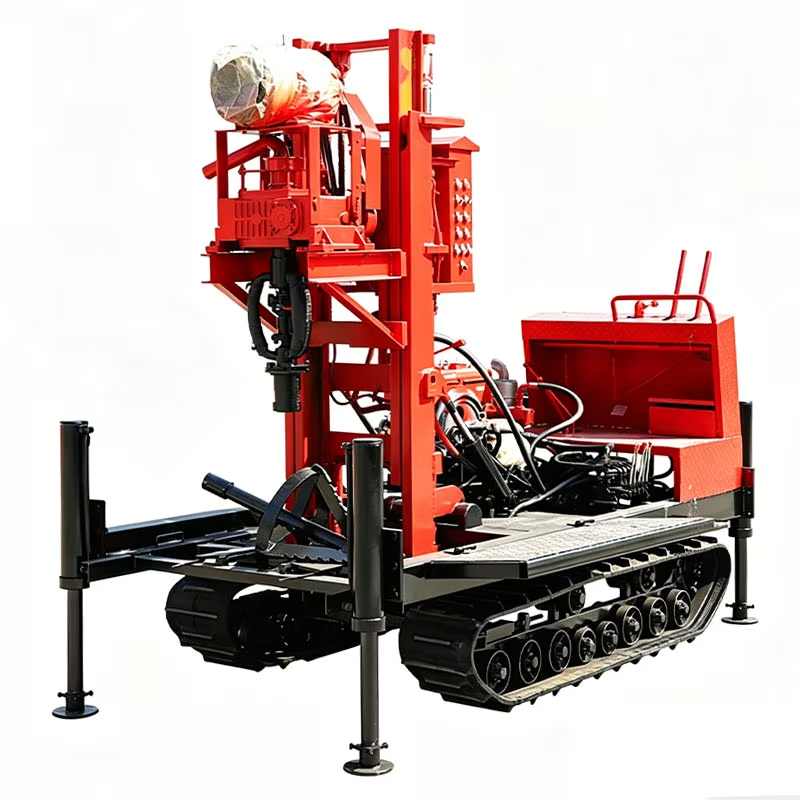
A track drill rig is a drilling machine mounted on a crawler chassis designed to move efficiently across rough terrain while maintaining operational stability.
Unlike wheeled drilling equipment, crawler systems distribute weight more evenly, reducing ground pressure and improving traction.
Many drilling projects take place in locations where roads do not exist.
Crawler-mounted systems provide:
This makes them especially suitable for rural water well projects and agricultural irrigation applications.
The drilling system generates torque and penetration force necessary to create boreholes.
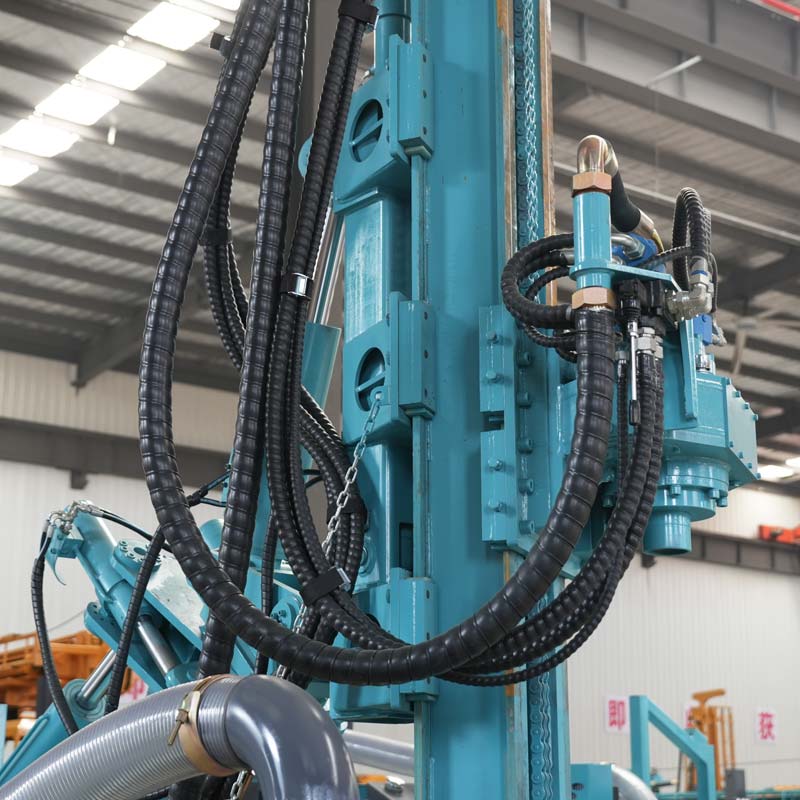
The hydraulic system controls drilling functions, lifting operations, and crawler movement.
The mast supports drilling rods while maintaining vertical alignment during operation.
The crawler base provides mobility and stability across challenging terrain conditions.
The drilling tool cuts through geological formations while circulating fluid or air removes cuttings from the borehole.
The process generally includes:
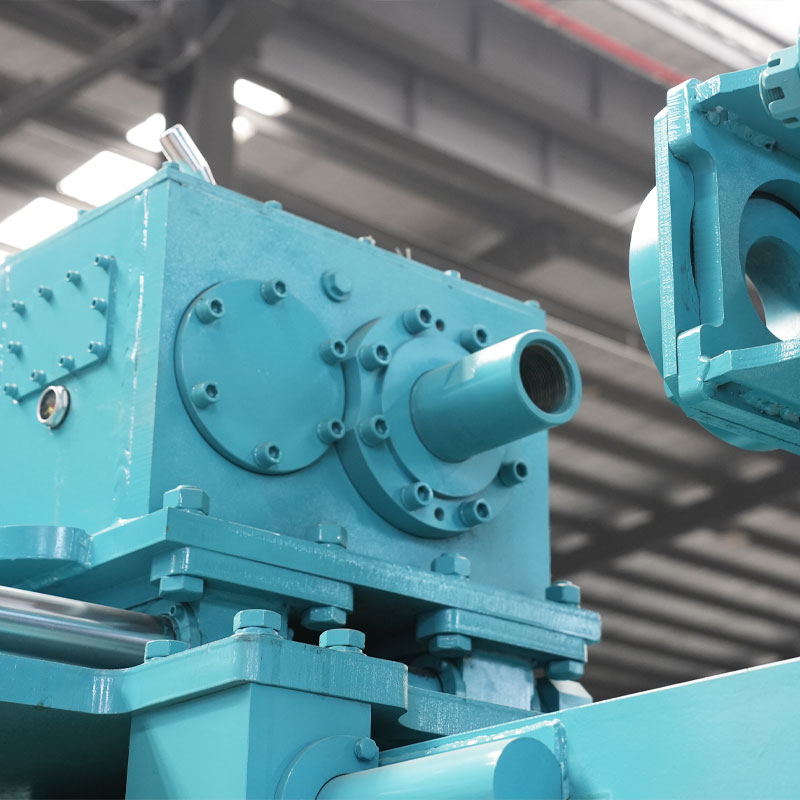
Many modern track drill rigs use full hydraulic drive systems.
Benefits include:
Hydraulic technology has significantly improved drilling accuracy and operational productivity.
Small crawler-mounted hydraulic rigs are designed for shallow and medium-depth wells.
Typical specifications:
| Article | Spécification |
|---|---|
| Profondeur de forage | 60-100m |
| Diamètre du trou | 150-300mm |
| Type de lecteur | Full Hydraulic |
| Power Source | Diesel Engine |
| Mobility | Crawler Mounted |
| Formation appropriée | Sol, argile, sable, roche molle |
These machines offer:
They are widely used for household wells and agricultural irrigation systems.
Positive circulation drilling rigs are designed for deeper and larger diameter boreholes.
Typical specifications:
| Article | Spécification |
|---|---|
| Profondeur de forage | 100-300m |
| Diamètre du trou | 300-800mm |
| Type de lecteur | Hydraulic / Diesel / Electric |
| Méthode de forage | Positive Circulation |
| Mobility | Crawler Mounted |
| Application | Deep Water Wells |
Positive circulation systems continuously transport cuttings away from the drill bit.
Advantages include:
Farmers rely on groundwater to maintain crop productivity.
Track drill rigs help establish:
Many rural communities depend on groundwater for domestic use.
Track drill rigs provide a practical solution for drilling residential water wells in remote locations.
Temporary wells are often required to lower groundwater levels during construction.
Applications include:
Drilling rigs can also collect geological information for engineering and environmental projects.
| Caractéristique | Track Drill Rig | Truck-Mounted Rig |
|---|---|---|
| Terrain Adaptability | Excellent | Moderate |
| Off-Road Performance | Excellent | Limité |
| Stability | Haut | Moyen |
| Transportation Speed | Inférieur | Supérieur |
| Remote Area Access | Excellent | Limité |
| Agricultural Use | Ideal | Moderate |
Choose a track drill rig if:
Choose a truck-mounted rig if:
Suitable for:
Track drill rigs can efficiently drill through loose sand when proper circulation systems are used.
More powerful hydraulic systems are often required to maintain penetration rates.
Common formations include:
Different projects require different drilling capacities.
General guideline:
| Application | Recommended Depth |
|---|---|
| Household Well | 60-120m |
| Irrigation Well | 80-200m |
| Deep Water Well | 150-300m |
| Industrial Water Well | 200m+ |
Larger water demands typically require larger borehole diameters.
Always evaluate:
before selecting equipment.
Available options include:
Modern equipment increasingly integrates:
Manufacturers are focusing on:
Cloud-based systems can provide:
Most agricultural irrigation wells require drilling depths between 80 and 200 meters depending on groundwater conditions.
Yes. Crawler-mounted systems are specifically designed to operate on soft and uneven ground.
Hydraulic systems generally offer smoother control, higher efficiency, and lower maintenance requirements.
Typical agricultural wells range from 200mm to 400mm, while larger industrial wells may require diameters exceeding 500mm.
Le track drill rig has become one of the most effective solutions for modern water well drilling projects. Combining crawler mobility, hydraulic power, and adaptable drilling technologies, these machines provide reliable performance across diverse geological conditions.
Whether drilling a household water well, constructing an agricultural irrigation system, or developing a deep groundwater source, selecting the appropriate track drill rig can significantly improve drilling efficiency, reduce operational costs, and ensure long-term project success.
A track drill rig is primarily used for water well drilling, irrigation projects, geological exploration, dewatering wells, and foundation drilling.
Crawler-mounted systems provide superior mobility and stability on rough terrain compared to wheeled equipment.
Most modern rigs can drill through soil, clay, sand, gravel, cobbles, and soft rock formations.
Small rigs typically drill 60-100m, while larger units can reach 300m or more.
Yes. They are widely used for farmland irrigation wells, livestock water systems, and rural groundwater development.