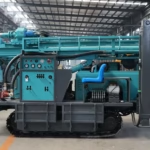
Hydraulic Drilling Rig Design Guide for Global Use
Welcome to our blog. We are a professional manufacturer of construction machinery, specializing in high-performance drilling rigs, loaders, and compact equipment for global engineering projects.
👉 Follow us for the latest updates and project insights 👉 Contact us for fast quotations and customized machinery solutions
Stay tuned to our blog for more industry insights and engineering expertise.
Hydraulic transmission efficiency and pressure control mechanisms
Real-world drilling performance data and optimization methods
Comparative analysis of rig types and geological adaptability
Global standards (ISO, API, EN) and compliance frameworks
Cost structure, lifecycle analysis, and ROI optimization
Case studies from water wells, agriculture, and mining exploration
Digital transformation, automation, and smart drilling technologies
Introduction
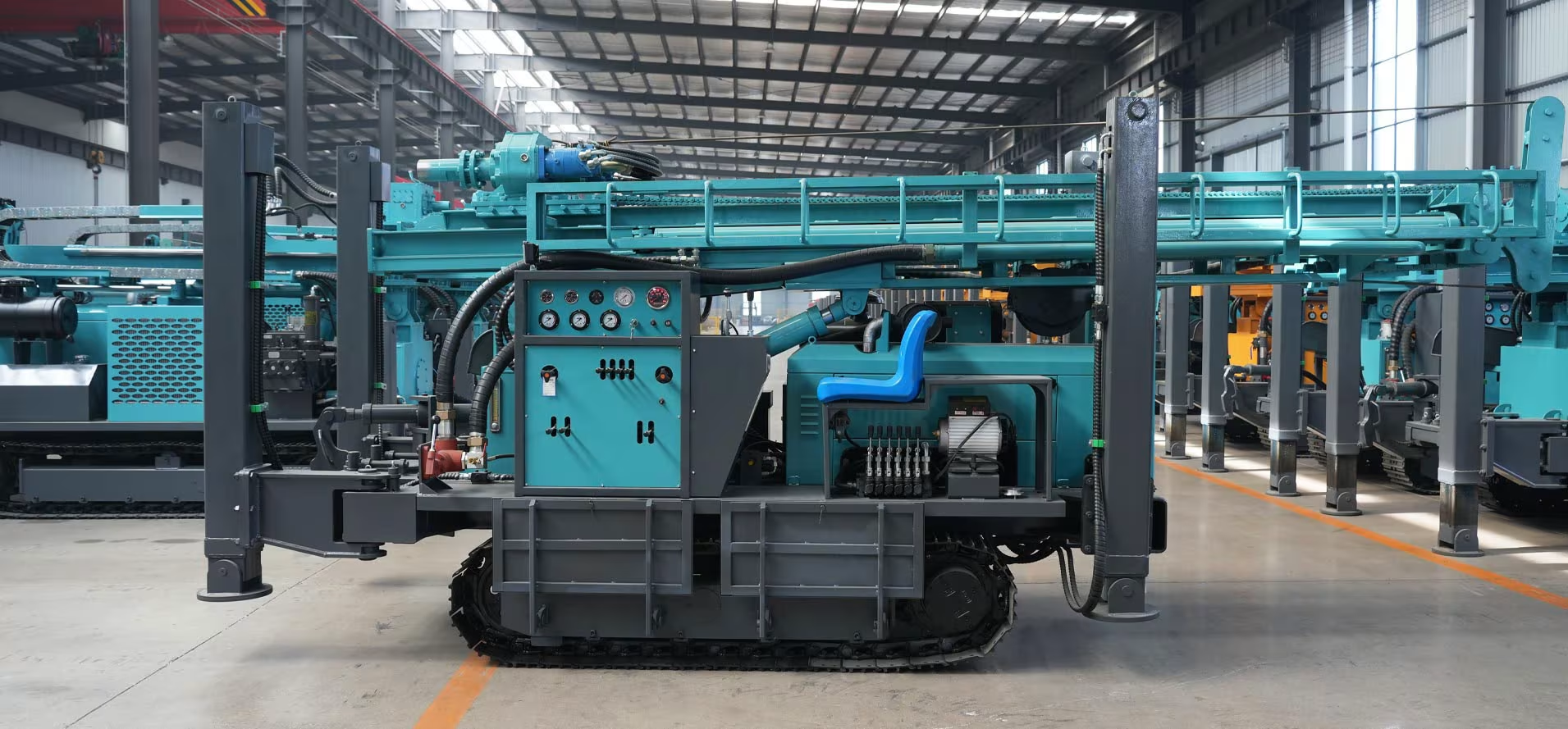
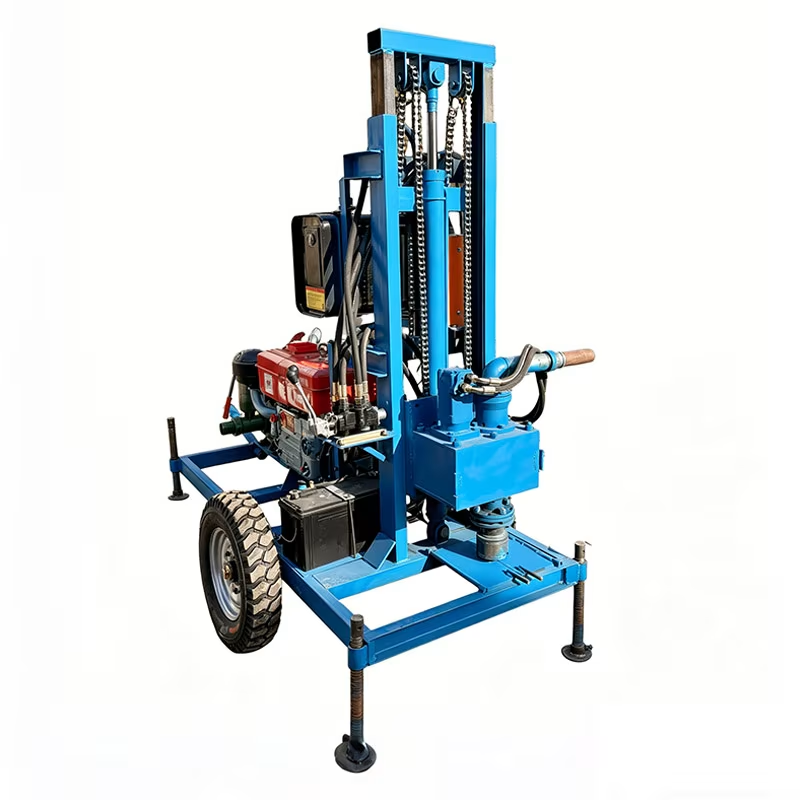
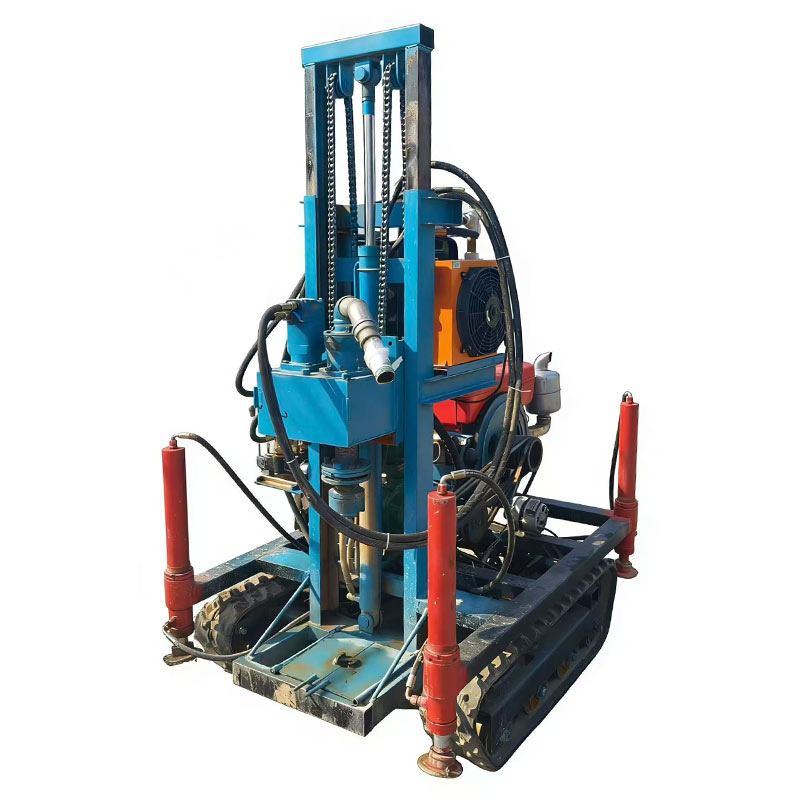
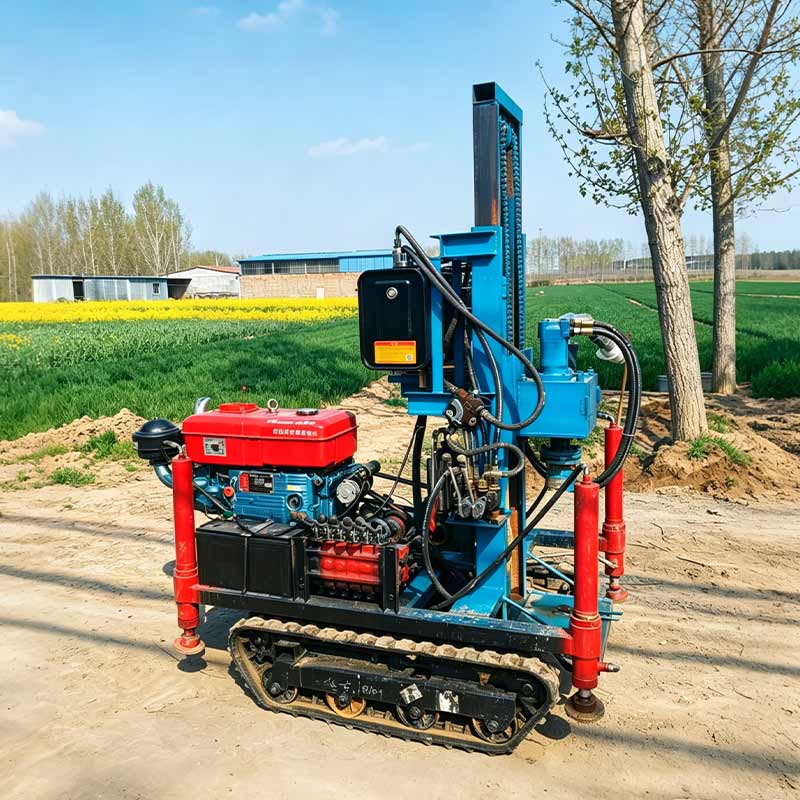
Modern drilling technology has evolved significantly due to advancements in hydraulic power systems, automation control, and structural optimization. The evolution of hydraulic drilling rig design represents a shift from mechanical energy transmission to precision-controlled fluid dynamics systems.
In today’s infrastructure development, drilling equipment is required to operate in increasingly complex environments, from rural irrigation wells to geological exploration and foundation engineering.
Drilling Engineering now integrates hydraulic system modeling, finite element structural analysis (FEA), and real-time sensor feedback systems to optimize drilling accuracy and efficiency.
Industry data shows that modern hydraulic rigs can improve drilling efficiency by 25%–40% compared to traditional mechanical rigs while reducing maintenance costs by up to 30%.
Hydraulic Drilling Rig Design System Architecture (Full Engineering Breakdown)
A modern hydraulic drilling system is a multi-layer integrated engineering platform composed of mechanical, hydraulic, and electronic subsystems. Each subsystem is designed to ensure energy efficiency, torque stability, and operational safety under continuous heavy-load drilling conditions.
In advanced engineering practice, the system is optimized through hydraulic pressure balancing, load feedback control, and structural reinforcement design, allowing stable performance across different geological formations.
1. Diesel Power Generation Module
The diesel engine remains the primary energy source in most mobile hydraulic drilling systems.
Technical Parameters (Expanded):
Power range: 18 HP – 120 HP (small to medium rigs)
Fuel consumption: 2.5 – 6.5 L/hour depending on load intensity
Engineering Insight: Hydraulic Efficiency Loss Model
Typical hydraulic systems experience energy loss across multiple stages:
Pump conversion loss: 5%–8%
Pipeline friction loss: 3%–6%
Valve regulation loss: 2%–4%
Thermal dissipation loss: 2%–5%
Total system efficiency in optimized conditions: 80%–90%
Optimization Strategy:
Use low-viscosity anti-wear hydraulic oil
Optimize pipeline routing to reduce turbulence
Install variable displacement pumps for adaptive flow control
Engineering Insight: Hydraulic Efficiency Loss
Typical hydraulic systems experience:
5%–8% energy loss in pump conversion
3%–6% loss in pipeline friction
2%–4% loss in valve control
Total efficiency: 80%–90% in optimized systems
3. Drilling Rotation System
This subsystem controls drilling bit rotation speed and torque output.
Features (Extended):
Variable displacement hydraulic motor
Torque range: 800–4500 N·m (medium rigs)
Adjustable RPM: 30–120 rpm
Anti-stall torque protection system
Load-sensitive speed adjustment
Engineering Insight: Torque-Resistance Matching
When encountering harder formations:
Torque demand increases exponentially
Rotation speed must be reduced to maintain stability
Hydraulic pressure compensation is automatically triggered in advanced systems
Improper torque control can lead to bit overheating and premature wear increase of 25%–40%.
4. Lifting System (Double-Chain Hydraulic Lifting)
This system ensures vertical control of drill rods and maintains drilling alignment stability.
Engineering Structure:
Dual-chain synchronized lifting mechanism
Hydraulic cylinder balance control system
Anti-slip load distribution design
Reinforced pulley tension compensation system
Functional Advantages:
Improves lifting force efficiency by 15%–25% compared to single-chain systems
Reduces vertical oscillation during deep drilling
Enhances rod alignment accuracy under load
Engineering Insight:
Uneven lifting force distribution is one of the main causes of drilling deviation. Double-chain systems significantly reduce this risk by maintaining symmetrical load transfer.
5. Drill Tower Structural System
The drill tower is the primary load-bearing structure of the entire hydraulic drilling rig.
ISO 4413: Hydraulic fluid power safety requirements
ISO 18752: Hydraulic hose performance classification
API Standards
American Petroleum Institute guidelines apply in high-end drilling systems:
Pressure safety regulation
Equipment reliability testing
Operational safety compliance
European EN Standards
EN 16228: Drilling and foundation equipment safety
Structural stability certification
Environmental compliance rules
Cost Structure & Lifecycle Engineering Analysis
Cost Components
Engine system: 25%–30%
Hydraulic system: 30%–40%
Structural frame: 15%–20%
Control systems: 10%–15%
Maintenance cost: lifecycle dependent
Lifecycle Cost Insight
Hydraulic drilling rigs typically reduce total operational cost by:
20%–35% over 5–8 year lifecycle
15% fuel savings compared to mechanical systems
25% reduction in downtime costs
Failure Analysis in Hydraulic Drilling Rig Systems
Common Failure Modes
Hydraulic oil contamination
Pump cavitation
Cylinder seal leakage
Overheating in continuous operation
Engineering Prevention Strategy
Regular ISO particle count monitoring
Hydraulic oil replacement cycles (500–1000 hours)
Temperature control systems (<70°C optimal range)
Digital Transformation & Smart Drilling Systems
1. Sensor-Based Monitoring Systems
Modern rigs include:
Pressure sensors
Torque monitoring systems
Depth tracking sensors
2. AI Optimization Algorithms
AI systems optimize:
Drilling speed
Fuel consumption
Bit wear prediction
3. Remote Operation Systems
Operators can now:
Monitor rigs remotely
Adjust hydraulic parameters in real time
Receive predictive maintenance alerts
Industry Trends & Market Forecast
Global Market Growth
Expected CAGR: 5%–7% (2025–2030)
Strong demand in Asia, Africa, and Middle East
Increasing use in agriculture and infrastructure sectors
Key Industry Drivers
Water resource development
Rural infrastructure expansion
Mining exploration growth
Urban underground engineering
Conclusion
The evolution of hydraulic drilling rig design represents a major advancement in modern drilling engineering, combining hydraulic power transmission, structural optimization, and digital control systems.
With improved efficiency, reduced cost, and advanced automation, hydraulic rigs are becoming the global standard for water well drilling, geological exploration, and infrastructure development.
As technology continues to evolve, future systems will integrate AI, IoT, and autonomous control, pushing drilling engineering into a fully intelligent era.