Get in touch
* Your personal information is securely protected and will only be used for business communication purposes.
Welcome to our blog. We are a professional manufacturer of construction machinery, specializing in high-performance drilling rigs, loaders, and compact equipment for global engineering projects.
👉 Follow us for the latest updates and project insights
👉 Contact us for fast quotations and customized machinery solutions
Stay tuned to our blog for more industry insights and engineering expertise.
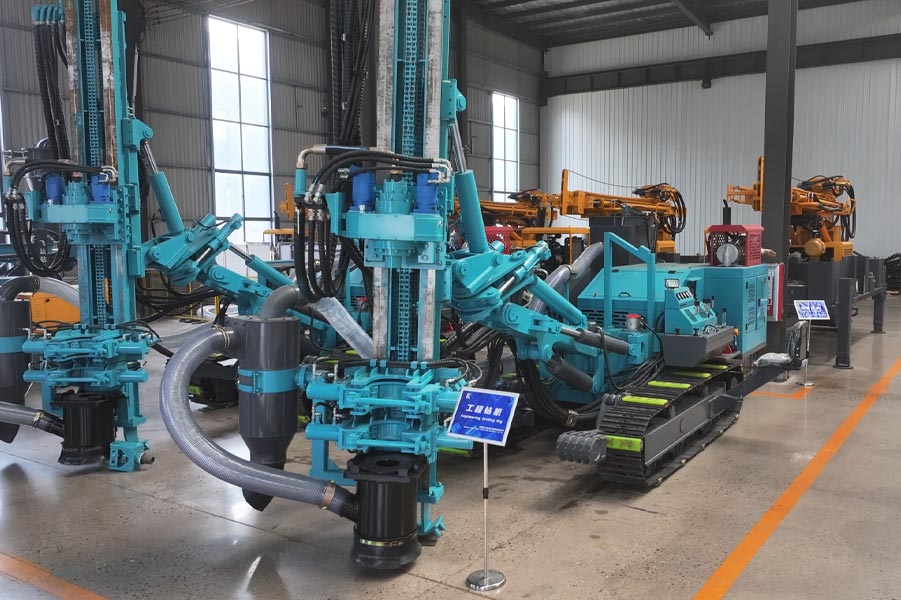
Deep water well drilling rigs are at the forefront of modern water resource management, irrigation, and infrastructure development. As global water demand increases, drilling technology has evolved to ensure maximum efficiency, safety, and cost-effectiveness. In 2026, engineers and project managers must understand the full capabilities, technical specifications, and operational advantages of different deep water well drilling rigs to make informed decisions.
Key Takeaways of This Guide:
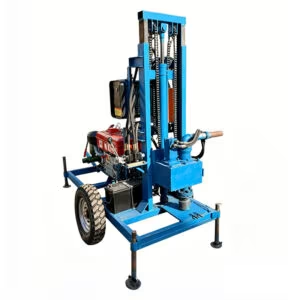
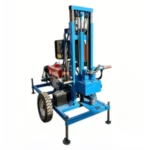
Concept Overview:
Designed for small-scale water supply projects, portable wheel-mounted rigs offer flexibility, quick setup, and easy transportation across rural or agricultural sites.
Technical Highlights:
Engineering Advantages:
The double-chain hydraulic lifting system ensures stability during operation. This rig is particularly efficient for household water wells, irrigation systems, and soft formation geological drilling.
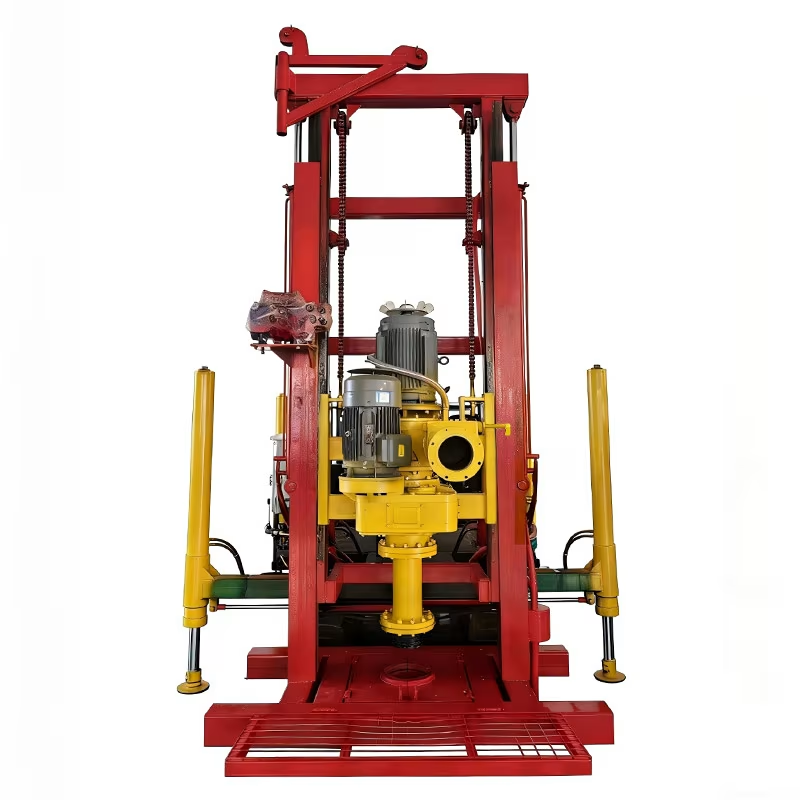
Concept Overview:
Used in large-diameter and deep water well projects, reverse circulation rigs discharge cuttings through the drill pipe for enhanced drilling speed and cleaner boreholes.
Technical Specifications:
Operational Insight:
Reverse circulation technology reduces drilling resistance and improves cuttings removal efficiency. According to the Journal of Hydraulic Drilling (2025), reverse circulation rigs can achieve up to 30% faster penetration in hard soil formations compared to direct circulation rigs.
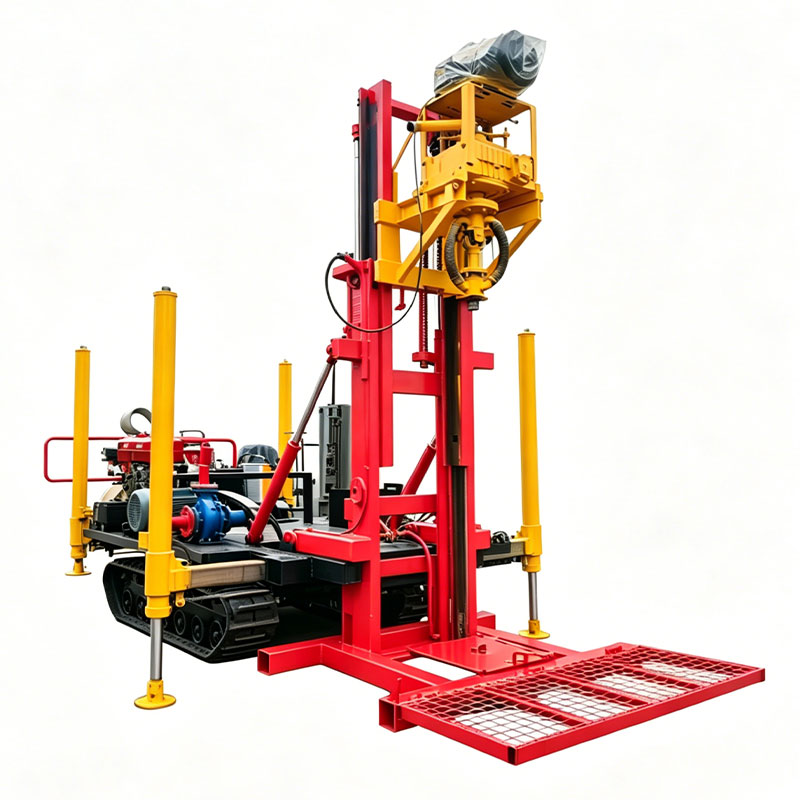
Concept Overview:
Crawler-mounted rigs that use mud circulation for shallow to medium-depth drilling. They provide reliable performance in soft soils and weathered rock formations.
Key Specifications:
Engineering Applications:
Ideal for rural water supply, farmland irrigation, and small civil engineering projects. The crawler-type chassis ensures stability on uneven terrain.
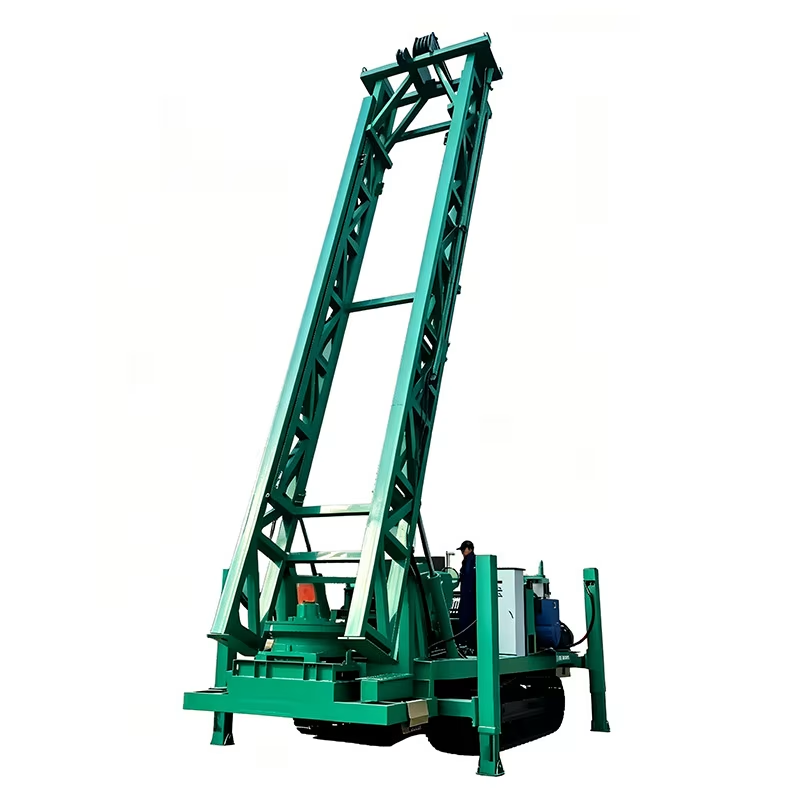
Concept Overview:
This traditional rig combines rotary disc technology with hydraulic drive and positive mud circulation. Suitable for both medium and deep drilling.
Technical Specifications:
Operational Advantages:
Positive mud circulation improves slag removal efficiency and reduces drilling resistance. This rig is widely used for irrigation, dewatering wells, and pile foundation construction.
| Rig Type | Depth Range | Hole Diameter | Drive Type | Suitable Formation | Special Advantage |
|---|---|---|---|---|---|
| Portable Wheel-Mounted | 60–100 m | 150–300 mm | Hydraulic/Diesel | Soil, Clay, Sand | Quick setup, rural deployment |
| Reverse Circulation | 50–300 m | 300–1800 mm | Hydraulic/Electric/Diesel | Soft Rock, Cobble, Loose Strata | Fast drilling, efficient cuttings removal |
| Direct Circulation | 100–300 m | 110–300 mm | Hydraulic/Diesel | Soil, Sand, Weathered Rock | Cost-effective, stable on soft ground |
| Disc-Type | 100–800 m | 300–1200 mm | Hydraulic | Soil, Sand, Cobble, Soft Rock | High efficiency, deep drilling |
Hydraulic systems allow for consistent torque and lifting force, reducing wear and energy loss compared to mechanical drives.
Wheel-mounted rigs provide rapid relocation, while crawler-mounted rigs offer stability on uneven terrain. Both designs optimize project scheduling and reduce downtime.
Concept Overview:
Lifecycle assessment considers initial costs, maintenance, energy consumption, and operational reliability.
Engineering Insight:
Investment in hydraulic-driven reverse circulation rigs provides long-term savings in large-scale irrigation and industrial projects.
In 2026, deep water well drilling rigs have evolved into highly efficient, adaptable, and sustainable machines capable of meeting global water demands. From portable wheel-mounted units to advanced reverse circulation and disc-type rigs, engineers can select the best rig according to formation, depth, and project scale. Incorporating hydraulic efficiency, predictive maintenance, and environmental compliance ensures projects are completed safely, cost-effectively, and sustainably.
Future Outlook:
With AI-driven drilling, low-emission engines, and smart sensors becoming standard, the next generation of deep water well drilling rigs will offer unprecedented precision, safety, and productivity for water resource management and civil engineering projects worldwide.
A1: Reverse circulation and disc-type rigs, especially those with tungsten carbide drill bits.
A2: Typically no; these are optimized for small-scale shallow wells.
A3: Use crawler-mounted rigs with pre-fitted spare parts and modular hydraulic systems.
A4: Yes, hydraulic systems provide consistent torque with lower fuel consumption.
A5: ISO 9001 quality management, ISO 14001 environmental, and local occupational safety standards for drilling.