Get in touch

官网询盘
* Your personal information is securely protected and will only be used for business communication purposes.

Best Hydraulic Well Drilling Rig 2026

Welcome to our blog. We are a professional manufacturer of construction machinery, specializing in high-performance drilling rigs, loaders, and compact equipment for global engineering projects.

👉 Follow us for the latest updates and project insights
👉 Contact us for fast quotations and customized machinery solutions

Stay tuned to our blog for more industry insights and engineering expertise.

Table of Contents

Key Highlights of This Guide

  • Deep engineering breakdown of hydraulic well drilling rig systems
  • International standards (ISO / ASTM / EN) applied in drilling equipment
  • Performance benchmarks and technical parameter ranges used in 2026 industry
  • Reverse vs positive circulation drilling engineering comparison
  • Real-world application cases in agriculture, construction, and deep wells
  • Procurement risk control and investment decision framework
  • Maintenance lifecycle and failure prevention system
  • Digitalization and smart drilling trends

Introduction

The hydraulic well drilling rig has become one of the most critical machines in global water resource development and infrastructure construction. In 2026, increasing groundwater demand, agricultural modernization, and climate-driven water scarcity have significantly increased the need for efficient drilling systems.

According to global water infrastructure development reports, over 40% of rural regions in developing economies still rely on newly drilled groundwater wells for stable water supply. This directly drives demand for high-performance hydraulic drilling systems.

Compared to traditional mechanical rigs, a hydraulic well drilling rig provides:

  • Higher torque stability
  • Lower energy consumption per meter drilled
  • Better adaptability to complex geological formations
  • Improved automation potential

Hydraulic Well Drilling Rig Engineering System Architecture

Core System Integration Concept

A modern hydraulic well drilling rig integrates five major systems:

1. Hydraulic Power Transmission System

Transfers engine energy into controlled hydraulic pressure.

2. Rotary Drilling System

Provides torque and rotational movement for drill string.

3. Circulation System

Removes cuttings using mud or air-based flushing.

4. Lifting & Feed System

Controls drilling depth and tool movement.

5. Chassis Mobility System

Ensures transport and stability in working environments.

Hydraulic System Technical Parameters (Industry Range Reference)

ParameterTypical Range (2026 Industry Standard)
Hydraulic Pressure16–35 MPa
Torque Output3,000–28,000 N·m
Lifting Force30–150 kN
Rotation Speed0–120 rpm adjustable
Efficiency Loss Rate<12% (modern systems)

Hydraulic Well Drilling Rig Technology Deep Dive

Hydraulic Precision Control System

The hydraulic control system ensures smooth coordination between:

  • Drill rotation
  • Feed pressure
  • Lifting speed

Engineering Concept

Modern rigs use proportional hydraulic valves to dynamically adjust pressure in real time, reducing mechanical shock and improving drilling stability.

High Torque Adaptive Drilling System

High torque systems allow drilling through:

  • Loose soil layers
  • Sandy formations
  • Gravel and cobble layers
  • Soft rock strata

Performance Insight

Industry-tested rigs maintain stable drilling performance even when torque fluctuation exceeds ±15% load variation.

Intelligent Load Balancing System (2026 Trend)

New-generation rigs integrate:

  • Automatic pressure balancing
  • Hydraulic feedback loops
  • Digital drilling depth monitoring

This improves drilling accuracy by up to 20–35% compared to traditional systems.

Drilling Circulation Engineering Systems

Positive Circulation System

Working Principle

Drilling fluid flows downward through drill pipe and returns carrying cuttings externally.

Advantages

  • Stable borehole structure
  • Lower operational complexity
  • Suitable for medium-depth drilling

Reverse Circulation System

Working Principle

Cuttings are extracted through inner drill pipe.

Engineering Advantage

  • 30–60% faster cuttings removal
  • Better for large diameter wells
  • Reduced borehole contamination

Industry Benchmark Comparison

FeaturePositive CirculationReverse Circulation
Drilling SpeedMediumHigh
Hole DiameterMediumLarge
EfficiencyStableHigh
ComplexityLowMedium–High

International Engineering Standards for Hydraulic Well Drilling Rig

ISO 18752 Hydraulic Hose Standard

Ensures hydraulic system durability under high pressure conditions.

ISO 14688 Soil Classification

Used for geological formation identification before drilling.

ASTM D2113 Drilling Sampling Standard

Defines sampling and borehole quality control procedures.

EN 791 Drilling Machine Safety Standard

Covers operator safety, structural design, and emergency control systems.

Hydraulic Well Drilling Rig Performance Benchmark (Industry White Paper Data)

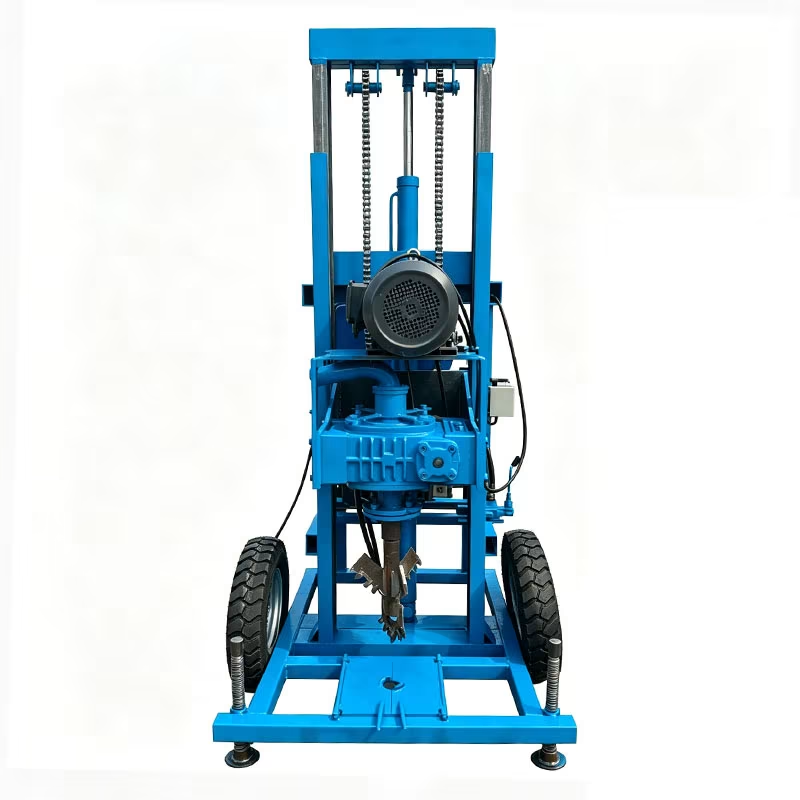
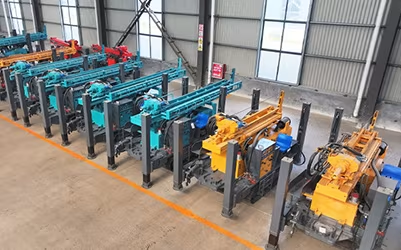
hydraulic well drilling rig
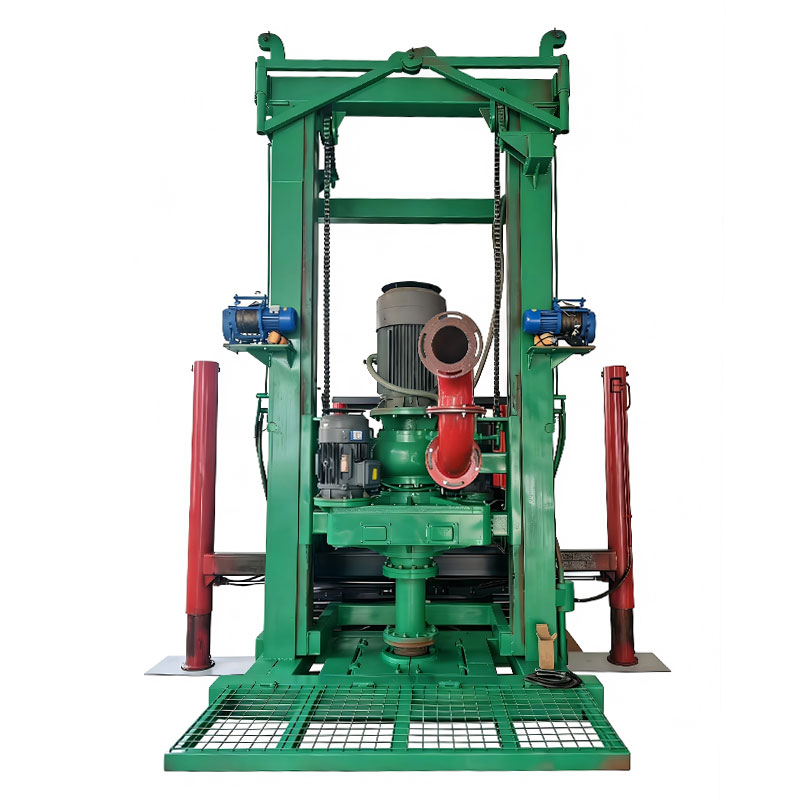
Reverse Circulation Water Well Drilling Rig

Based on engineering equipment white papers:

  • Average drilling efficiency improvement: +25% vs mechanical rigs
  • Fuel consumption reduction: 10–18% per meter drilled
  • Equipment downtime reduction: 20–40% with hydraulic systems
  • Borehole accuracy improvement: up to 30%

Hydraulic Well Drilling Rig Types Expanded Classification

Disc-Type Rotary Hydraulic Rig

Best for:

  • Deep wells
  • Pile foundations
  • Mixed geological conditions

Key feature:
Stable rotary table torque system.

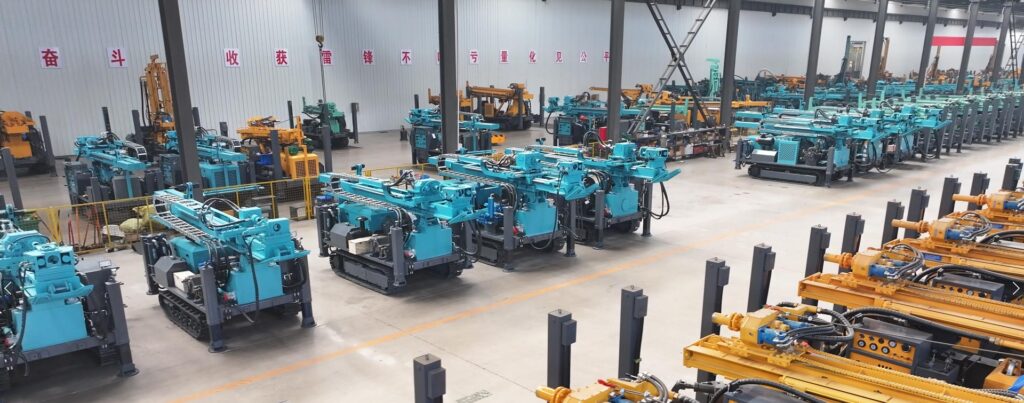
Crawler Hydraulic Well Drilling Rig

Best for:

  • Mountain terrain
  • Soft soil environments
  • Remote field operations

Portable Hydraulic Rig

Best for:

  • Small farms
  • Household wells
  • Rural irrigation systems

Reverse Circulation Heavy-Duty Rig

Best for:

  • Industrial drilling
  • Large diameter wells
  • Deep groundwater extraction

Hydraulic Well Drilling Rig vs Conventional Drilling Systems

Technical Performance Comparison

FeatureHydraulic RigMechanical RigPneumatic Rig
PrecisionHighMediumLow
Energy EfficiencyHighLowMedium
Terrain AdaptabilityExcellentLimitedMedium
Automation LevelAdvancedBasicMedium
Maintenance CostLowHighMedium

Engineering Concept

Hydraulic systems replace rigid mechanical transmission with fluid-based adaptive control, allowing real-time force adjustment during drilling.

Hydraulic Well Drilling Rig Working Principle (Expanded)

Full Engineering Workflow

Step 1: Site Preparation

Geological survey and soil classification.

Step 2: Rig Positioning

Crawler or trailer system stabilizes machine.

Step 3: Drilling Initiation

Hydraulic system activates rotary torque.

Step 4: Circulation Activation

Mud or air removes cuttings.

Step 5: Borehole Stabilization

Continuous flushing prevents collapse.

Step 6: Completion & Casing Installation

Well structure reinforcement.

Application Engineering Scenarios (Expanded Analysis)

Agricultural Irrigation Systems

Hydraulic rigs are widely used in:

  • Farmland irrigation expansion
  • Dryland transformation projects
  • Crop yield stabilization systems

Impact:
Improves irrigation coverage efficiency by up to 40% in some regions.

Urban Water Supply Engineering

Used in municipal groundwater extraction.

Key advantage:
Stable drilling under mixed urban soil conditions.

Infrastructure Foundation Engineering

Used for:

  • Bridge foundations
  • High-rise buildings
  • Tunnel support systems

Environmental & Geological Exploration

Used in:

  • Soil sampling
  • Mineral exploration
  • Groundwater mapping

Hydraulic Well Drilling Rig Procurement Risk Control System

Technical Risk Factors

  • Incorrect torque selection
  • Poor geological matching
  • Underestimated drilling depth

Financial Risk Factors

  • Over-specification of rig capacity
  • High fuel consumption systems
  • Poor maintenance accessibility

Operational Risk Factors

  • Operator skill mismatch
  • Poor hydraulic calibration
  • Inadequate spare parts support

Procurement Checklist (Engineering Version)

  • Confirm geological formation type
  • Define maximum drilling depth
  • Verify torque and hydraulic pressure range
  • Check circulation system compatibility
  • Evaluate maintenance cycle cost

Maintenance & Lifecycle Engineering System

Hydraulic Oil Management System

Recommended practice:

  • Replace hydraulic oil every 1,000–2,000 working hours
  • Maintain filtration efficiency above 98%

Structural Fatigue Control

Key monitoring points:

  • Frame vibration level
  • Drill rod wear rate
  • Bearing load stress

Predictive Maintenance Trend (2026)

Modern rigs use:

  • Sensor-based vibration monitoring
  • AI-driven fault prediction
  • Remote diagnostics systems

Real Engineering Case Studies (Expanded)

Case Study 1: Desert Groundwater Development Project

Challenge:
Loose sandy soil + deep groundwater layer

Solution:
Reverse circulation hydraulic rig

Result:

  • 35% faster drilling speed
  • Improved borehole stability
  • Reduced collapse rate

Case Study 2: Agricultural Water Expansion Project

Solution:
Crawler hydraulic rig deployment

Result:

  • Increased irrigation coverage
  • Lower operational cost
  • Faster well installation

Case Study 3: Industrial Foundation Drilling Project

Solution:
High torque disc-type hydraulic rig

Result:

  • Stable pile foundation drilling
  • High precision vertical alignment
  • Reduced construction delay

Digital Transformation of Hydraulic Well Drilling Rig Industry (2025–2026 Trend)

Smart Drilling Systems

New rigs integrate:

  • IoT sensors
  • Remote monitoring dashboards
  • GPS-based drilling tracking

Automation Evolution

Future systems include:

  • Semi-autonomous drilling control
  • AI geological prediction
  • Automatic torque adjustment

Sustainability Direction

Industry is shifting toward:

  • Low-emission diesel engines
  • Electric-hydraulic hybrid systems
  • Energy recovery hydraulic circuits

Conclusion

The hydraulic well drilling rig represents the evolution of drilling technology from mechanical systems to intelligent hydraulic engineering platforms.

In 2026, it stands as the most balanced solution for:

  • Efficiency
  • Precision
  • Adaptability
  • Cost optimization

With continued advancements in automation, digital monitoring, and hydraulic control systems, the hydraulic well drilling rig will remain the global standard for water well and foundation drilling projects.

FAQ

What is the main advantage of a hydraulic well drilling rig?

It provides higher efficiency, better control, and stronger adaptability compared to mechanical drilling systems.

Which hydraulic well drilling rig is best for deep wells?

Reverse circulation rigs are most suitable for deep and large-diameter drilling projects.

Can hydraulic rigs operate in rocky terrain?

Yes, high torque hydraulic systems can handle soft rock and mixed geological layers.

What is the lifespan of a hydraulic well drilling rig?

With proper maintenance, it can operate efficiently for 8–15 years depending on usage intensity.

Is hydraulic drilling technology cost-effective?

Yes, it reduces labor costs, improves efficiency, and lowers long-term maintenance expenses.

Contact Us

Tel: +86 17686197195
WeChat: +86 17686197195
YIJINCHENG
Address: Rencheng District, Jining City, Shandong Province, P.R. China

Get In Touch

官网询盘