Get in touch
* Your personal information is securely protected and will only be used for business communication purposes.
In drilling engineering, selecting the right rig, maintaining it properly, and following safety standards are key to project efficiency, equipment longevity, and operational safety. This article provides a concise guide for industry professionals on rig selection, maintenance, and OSHA compliance.
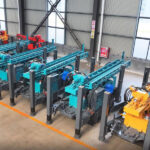
Selecting the right rig depends on geological conditions, project goals, and environment. Below is a concise comparison of three common rig types:
Our flagship non-excavation HDD rigs feature advanced hydraulic systems, high-torque units, and precision guidance. They enable efficient underground pipeline installation with minimal surface disruption, suitable for urban areas, river crossings, and protected zones. Available in multiple tonnages, they adapt to small to large-scale pipeline projects.
RC rigs specialize in fast, cost-effective bulk sampling and drilling in loose/water-rich formations, ideal for mineral exploration and water well construction. Using dual-wall drill rods, they deliver uncontaminated samples, with fast drilling speeds and adaptability to soft soil and moderately hard rock.
Versatile rotary rigs handle oil/gas exploration, deep water wells, and large infrastructure projects. With rotating drill bits and mud/air circulation, they excel in hard rock and deep drilling, offering high quality and reliability, though with higher complexity and cost.
Key Criteria: HDD for non-excavation pipelines; RC for fast sampling/loose formations; rotary for deep, hard-rock projects. Consider project goals, geology, environment, and scale.
Proper maintenance reduces downtime and costs. Below are 10 concise essential steps for all major rig types: