Ponte en contacto
* Su información personal está protegida de forma segura y sólo se utilizará con fines de comunicación comercial.
Bienvenido a nuestro blog. Somos un fabricante profesional de maquinaria de construcción, especializado en plataformas de perforación de alto rendimiento, cargadores y equipos compactos para proyectos de ingeniería globales.
👉 Síguenos para obtener las últimas actualizaciones y conocimientos del proyecto
👉 Contáctanos para cotizaciones rápidas y soluciones de maquinaria personalizadas
Estén atentos a nuestro blog para obtener más conocimientos de la industria y experiencia en ingeniería.
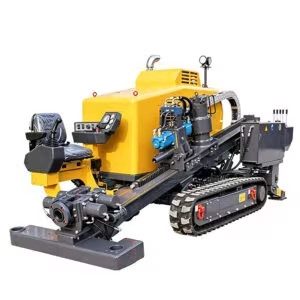
Los sectores globales de la construcción y la energía están experimentando una importante transformación impulsada por la urbanización, las regulaciones ambientales y la modernización de la infraestructura. Dentro de este cambio, el plataforma de perforación direccional se ha convertido en una tecnología fundamental para la instalación de tuberías subterráneas y la ingeniería sin zanjas.
Para 2026, se espera que la demanda de la industria crezca significativamente debido al aumento de las inversiones en transporte de petróleo y gas, servicios públicos municipales y redes de comunicación. Según informes globales sobre equipos de infraestructura, la adopción de la perforación sin zanjas ha aumentado en más 35% en los últimos cinco años, especialmente en regiones urbanas densamente pobladas.
Los sistemas de perforación direccional modernos ya no son sólo máquinas mecánicas: son plataformas de ingeniería inteligentes que combinan energía hidráulica, navegación digital y sistemas de control automatizados.
Las plataformas modernas están cada vez más equipadas con sistemas de automatización que permiten el control en tiempo real de la dirección, presión y velocidad de perforación.
Estos sistemas reducen el error humano y mejoran la precisión en entornos geológicos complejos.
El sistema de guía es el núcleo de las operaciones modernas de perforación direccional. Garantiza que las rutas de perforación sigan siendo precisas incluso en condiciones variables del suelo.
Los sensores avanzados y los módulos de navegación ajustan continuamente la dirección de perforación para evitar obstáculos.
| Característica | Plataforma de perforación direccional | Excavación a cielo abierto |
|---|---|---|
| Disrupción superficial | Mínimo | Alto |
| Velocidad de construcción | Más rápido | Más lento |
| Impacto Ambiental | Bajo | Alto |
| Idoneidad Urbana | Excelente | Limitado |
| Eficiencia de costos (a largo plazo) | Alto | Medio |
La perforación direccional utiliza un método sin zanjas que permite instalar tuberías bajo tierra sin excavación a gran escala.
Esto reduce significativamente los daños a la superficie y los costos de restauración.
La excavación tradicional requiere una excavación superficial completa, lo que aumenta la mano de obra, el impacto ambiental y la duración del proyecto.
Los sistemas hidráulicos proporcionan la principal fuerza motriz para las operaciones de perforación, garantizando un par y un empuje estables.
Están diseñados para mantener un rendimiento constante en condiciones de carga elevada.
Los sistemas de alto torque permiten a las plataformas perforar capas de roca dura, arcilla y suelo mixto.
Esta capacidad es esencial para la instalación de tuberías subterráneas de larga distancia.
| Parámetro | Especificación |
|---|---|
| Fuerza máxima de empuje/tracción | 180 kN |
| Par de rotación máximo | 8.000 N·m |
| Diámetro de la varilla de perforación | 73 mm |
| Profundidad máxima de perforación | 300 m |
| Potencia del motor | 75kW |
| Sistema de viaje | Tipo rastreador |
| Peso de la máquina | 6.500 kg |
| Tamaño de la máquina | 4,2m × 2,1m × 2,2m |
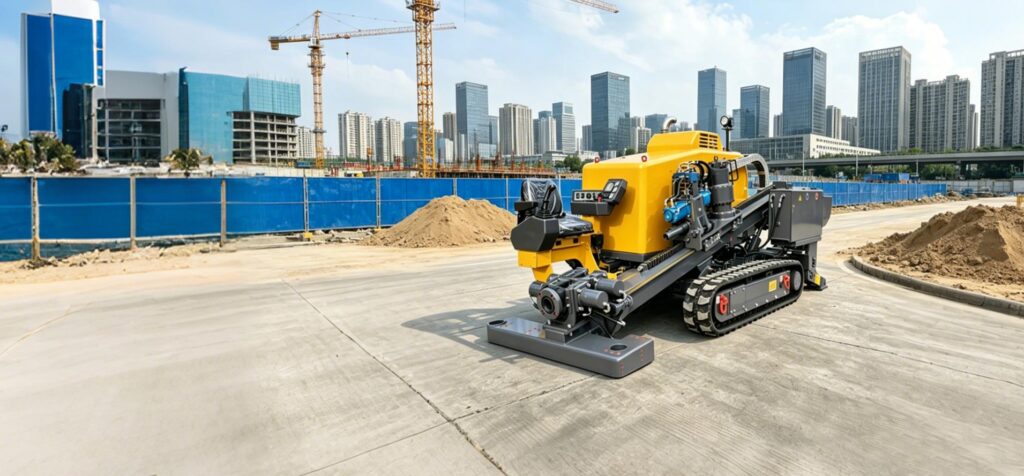
Las plataformas de perforación direccionales se utilizan ampliamente en áreas urbanas donde la excavación de superficies está restringida.
Permiten la instalación de tuberías debajo de carreteras, edificios y zonas densamente pobladas.
En las industrias del petróleo y el gas, las plataformas se utilizan para la instalación de tuberías subterráneas de larga distancia.
Reducen las perturbaciones ambientales manteniendo al mismo tiempo una alta precisión de instalación.
La perforación direccional es fundamental para el tendido de cables de fibra óptica y comunicación.
Permite un rápido despliegue de redes subterráneas sin interrumpir el tráfico ni la infraestructura.
La perforación sin zanjas reduce significativamente el daño ambiental en comparación con los métodos de excavación tradicionales.
Protege ríos, caminos y zonas ecológicas.
Las plataformas modernas reducen los plazos del proyecto al integrar control de perforación automatizado y sistemas de alto torque.
Esto mejora la productividad general de la construcción.
La reducción de la excavación de superficies conduce a entornos de construcción más seguros, especialmente en entornos urbanos.
Minimiza los riesgos relacionados con zanjas abiertas y exposición a maquinaria pesada.
| Factor | Plataforma de perforación direccional | Método de excavadora convencional |
|---|---|---|
| Tipo de construcción | Sin zanjas | Excavación abierta |
| Idoneidad Urbana | Alto | Bajo |
| Requisito laboral | Inferior | Más alto |
| Impacto Ambiental | Mínimo | Alto |
| Precisión de instalación | Alto | Medio |
Un proyecto municipal utilizó plataformas de perforación direccionales para instalar tuberías de agua debajo de una carretera importante.
Resultados:
Se utilizó un sistema de perforación sin zanjas para instalar gasoductos debajo de un río.
Resultados:
Las plataformas de perforación direccionales instalaron cables de fibra óptica en áreas urbanas densas.
Resultados:
La industria está avanzando hacia plataformas de construcción digitales que combinan IA, IoT y monitoreo en tiempo real.
Las plataformas futuras contarán con:
Políticas ambientales más estrictas están acelerando la adopción de tecnologías sin zanjas.
Los gobiernos están promoviendo métodos de construcción de bajo impacto en el desarrollo de infraestructura urbana.
Los informes de la industria sugieren que la demanda de equipos de perforación sin zanjas está creciendo aproximadamente 6-8% CAGR a nivel mundial debido a la modernización de la infraestructura.
La elección de la plataforma adecuada depende de las condiciones geológicas, la profundidad del proyecto y el tipo de tubería.
Moderno plataforma de perforación direccional los sistemas se diseñan cada vez más bajo estrictos marcos de ingeniería internacionales para garantizar la seguridad, la confiabilidad y la interoperabilidad.
Los estándares globales clave incluyen:
Estos estándares definen:
Un informe de cumplimiento de equipos de perforación de 2024 indicó que:
Las plataformas modernas están cada vez más integradas con sistemas de monitoreo basados en IoT que permiten diagnósticos en tiempo real.
Estos sistemas recopilan datos de:
La inteligencia artificial se utiliza ahora para optimizar las trayectorias de perforación subterránea.
El sistema analiza:
La fabricación de plataformas modernas sigue sistemas de ingeniería de precisión de grado industrial.
Procesuri cheie include:
Basado en informes de fabricación de la industria:
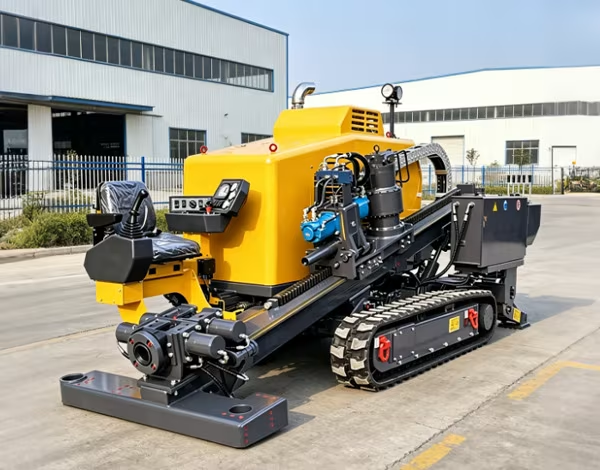
Los equipos de alto rendimiento se definen por su estabilidad de par bajo variaciones de carga.
La eficiencia hidráulica afecta directamente el consumo de combustible y la velocidad de perforación.
Los sistemas modernos logran:
| Componente de costo | Participación porcentual |
|---|---|
| Adquisición de equipos | 35-45% |
| Combustible y energía | 20-25% |
| Mantenimiento | 15-20% |
| Laboral | 10-15% |
| Pérdida de tiempo de inactividad | 5-10% |
Un estudio de inversión en infraestructura de 2025 mostró:
La tecnología de perforación direccional reduce significativamente la alteración ambiental al eliminar la excavación abierta.
Beneficii ambientale cheie:
Los contratistas modernos están cada vez más obligados a cumplir con los marcos ESG:
Un proyecto de perforación direccional de 1200 metros utilizó plataformas de alto torque para la instalación en terrenos desérticos.
Resultados:
Un proyecto de telecomunicaciones a gran escala utilizó equipos de disco duro compactos en núcleos urbanos.
Resultados:
Perforación direccional utilizada en suelos inestables y regiones propensas a inundaciones.
Resultados:
Los fabricantes están optando por centros de cadena de suministro localizados para reducir los retrasos logísticos.
Strategii cheie:
Las plataformas modernas están diseñadas bajo estrictos marcos HSE para proteger a los operadores y el medio ambiente.
Los sistemas clave incluyen:
Las auditorías de seguridad de la industria lo demuestran:
| Tecnología | Nivel de madurez | Eficiencia | Alcance de la aplicación |
|---|---|---|---|
| Plataforma de perforación direccional | Alto | Muy alto | Infraestructura global |
| Microtúnel | Medio | Alto | Sistemas de alcantarillado urbano |
| Elevación de tuberías | Medio | Medio | Tuberías de corta distancia |
| Aburrido guiado por láser | Emergente | Muy alto | Microproyectos de precisión |
Los sistemas futuros se integrarán:
Las plataformas de próxima generación se centrarán en:
La tecnología de gemelos digitales simulará:
La evolución del plataforma de perforación direccional refleja un cambio más amplio en la construcción global hacia soluciones de ingeniería más inteligentes, limpias y eficientes. Para 2026, la tecnología sin zanjas seguirá expandiéndose en los sectores de infraestructura, energía y comunicaciones.
Con los avances en automatización, sistemas hidráulicos y tecnología de guía digital, las plataformas de perforación direccional se están convirtiendo en equipos esenciales para proyectos modernos de ingeniería subterránea.
Se utiliza para instalar tuberías subterráneas sin excavación, especialmente en entornos urbanos y sensibles.
Los sistemas modernos pueden alcanzar profundidades de hasta 300 metros según el modelo y las condiciones geológicas.
Sí, en la mayoría de los proyectos urbanos y ambientalmente sensibles debido a una menor alteración de la superficie.
Los sectores de petróleo y gas, servicios públicos, telecomunicaciones e infraestructura municipal los utilizan ampliamente.
La combinación de automatización, guía de precisión y cumplimiento ambiental lo hace altamente eficiente y sostenible.