تواصل معنا
* معلوماتك الشخصية محمية بشكل آمن ولن يتم استخدامها إلا لأغراض الاتصالات التجارية.
مرحبا بكم في مدونتنا. نحن شركة تصنيع محترفة لآلات البناء، متخصصة في منصات الحفر عالية الأداء، والرافعات، والمعدات المدمجة للمشاريع الهندسية العالمية.
👉 تابعونا للحصول على آخر التحديثات ورؤى المشروع
👉 اتصل بنا للحصول على عروض أسعار سريعة وحلول الآلات المخصصة
ترقبوا مدونتنا لمزيد من الرؤى الصناعية والخبرة الهندسية.
A drilling rig is a major capital investment, but the quoted equipment price is only one part of the real cost. Buyers must also consider tooling, transportation, fuel use, maintenance, operator requirements, and potential downtime.
Key points covered in this guide:
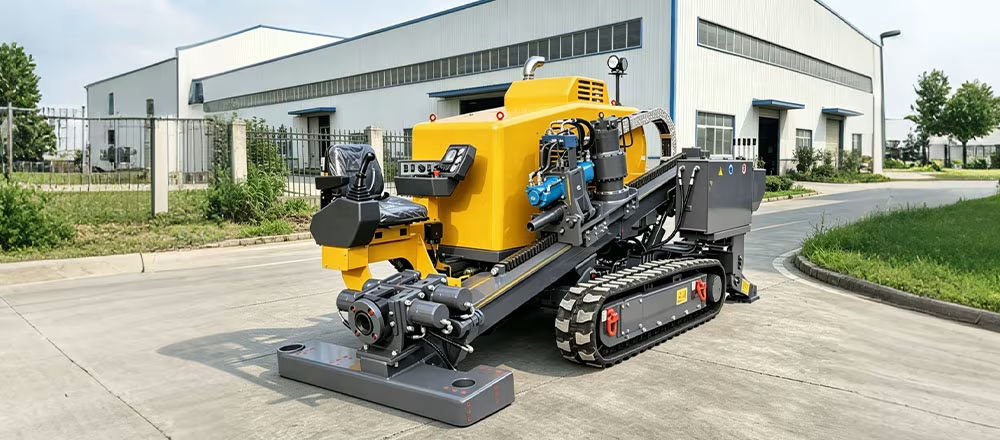
There is no universal price for a drilling rig machine. Two models that appear similar may have very different costs because of their drilling capacity, power system, chassis, hydraulic components, and included accessories.
A reliable quotation should therefore be based on the actual application rather than only the machine name or rated drilling depth.
Greater drilling depth generally requires a stronger mast, more powerful rotation system, longer drill rods, and higher lifting capacity. These requirements increase both the machine size and manufacturing cost.
Hole diameter is equally important. Large-diameter drilling creates greater torque and circulation demands, so a machine designed for wide foundation or dewatering holes may cost more than a compact water-well rig with a similar depth rating.
Soil, clay, sand, gravel, cobble, and hard rock require different drilling methods. A low-cost machine designed for soft formations may deliver poor productivity or suffer premature wear when used in abrasive rock.
Buyers should provide a geological report whenever possible. If a formal report is unavailable, information from nearby wells can help the manufacturer recommend a suitable configuration.
A project with uniform soil is usually easier to plan than one with alternating clay, gravel, fractured rock, and hard layers. Variable ground may require additional torque, different bits, casing systems, or more than one drilling method.
These additions raise the initial equipment cost but can reduce the risk of a stalled project.
The drilling method has a direct influence on machine design and price. Common options include mud rotary, direct circulation, reverse circulation, down-the-hole drilling, and horizontal directional drilling.
Each method requires a different combination of pumps, compressors, drill rods, bits, hydraulic systems, and cuttings-removal equipment.
Direct circulation sends drilling fluid down through the drill pipe and returns cuttings through the annular space. It is commonly used in suitable soil and sedimentary formations.
The system can be relatively straightforward, but its actual cost depends on hole depth, pump capacity, and the required drilling diameter.
Reverse circulation brings cuttings upward through the drill pipe. It is often selected for deep wells, large-diameter holes, and projects requiring efficient cuttings removal.
A reverse circulation water well drilling rig may require a more substantial circulation system and supporting equipment, affecting the complete purchase cost.
A DTH system uses compressed air to operate a hammer behind the drill bit. It is effective in rock but normally requires a correctly sized air compressor.
When comparing offers, buyers should check whether the compressor, hammer, and drill bits are included or quoted separately.
The purchase price generally includes the main machine and its standard configuration. A complete working package, however, may require several additional items.
| Cost component | What it may include | Why it matters |
|---|---|---|
| Base machine | Mast, chassis, rotary head and controls | Forms the main capital cost |
| Power system | Diesel engine, electric motor or hydraulic unit | Affects output and energy consumption |
| Drilling tools | Drill rods, bits, hammers and adapters | Must match the formation and hole size |
| Support equipment | Air compressor, mud pump or generator | May be essential for operation |
| Transportation | Inland freight, sea freight and insurance | Varies with machine size and destination |
| Import expenses | Duties, taxes and customs services | Depend on local regulations |
| Site preparation | Access road, working platform and water supply | Can affect mobilization time |
| Training | Operator and maintenance instruction | Reduces misuse and early failures |
| Spare parts | Seals, filters, hoses and wear components | Supports continuous operation |
| صيانة | Fluids, inspections and component replacement | Influences lifecycle cost |
| Downtime | Labor, rental and schedule losses | Can exceed the price of a replacement part |
The base price normally reflects structural strength, engine power, hydraulic capacity, automation, and standard components. However, manufacturers may use different definitions of “standard configuration.”
One offer may include drill rods and a mud pump, while another covers only the machine. Buyers should compare itemized quotations instead of comparing only the final numbers.
Drill rods, casing, bits, hammers, lubricants, filters, and seals are recurring expenses. Their service life depends on the geology, operating practice, material quality, and maintenance schedule.
A lower-priced bit that wears quickly may have a higher cost per drilled meter than a more durable option.
Machine dimensions and weight affect container selection, inland transportation, port handling, and unloading requirements. Oversized equipment may create additional logistics expenses.
Before placing an order, request the packed dimensions, gross weight, loading plan, trade terms, and suggested unloading method.
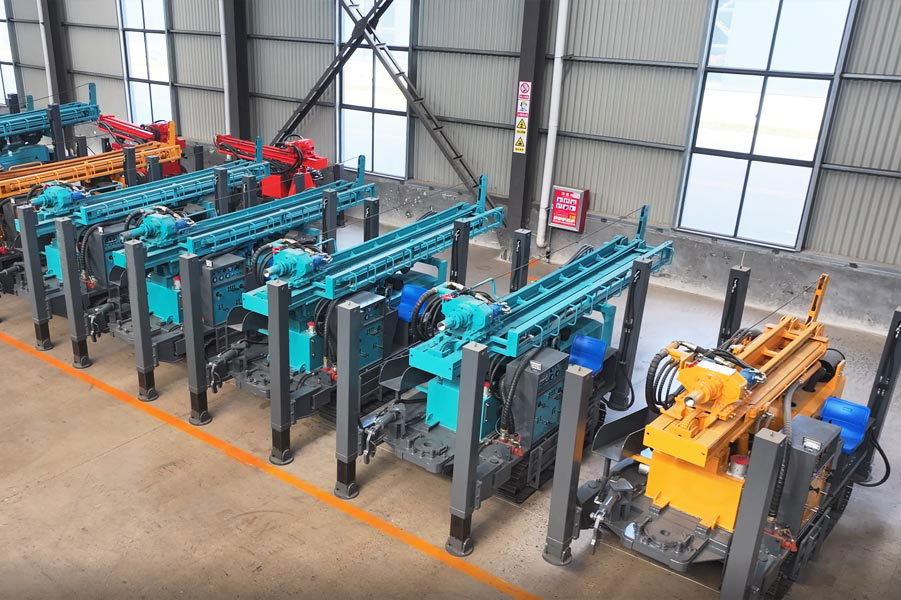
Different configurations serve different operating environments. The cheapest design is not necessarily the most economical choice for a particular project.
| Rig type | Relative initial cost | التنقل | Suitable applications | Main cost consideration |
|---|---|---|---|---|
| Portable wheel-mounted rig | Low to medium | Good on accessible roads | Small wells and light projects | Easy transport may reduce mobilization cost |
| Small crawler rig | متوسط | Strong on rough terrain | Rural wells and uneven sites | Better site access may improve utilization |
| Pneumatic crawler rig | Medium to high | Strong | Rock drilling and deep wells | Compressor cost must be included |
| Reverse circulation rig | Medium to high | Configuration-dependent | Large-diameter and deep holes | Circulation equipment adds cost |
| Disc-type rotary rig | Medium to high | Configuration-dependent | Water wells and foundations | Torque and mud system affect pricing |
| جهاز الحفر الاتجاهي | عالي | Project-specific | Trenchless pipeline installation | Guidance and tooling influence total cost |
A portable wheel-mounted hydraulic rig can be economical when job sites have suitable road access. Its mobility can simplify relocation between relatively flat sites.
A crawler-mounted small hydraulic rig may cost more initially, but its traction and stability can be valuable on muddy, rough, or undeveloped ground.
The answer depends on site access. A wheel-mounted machine may reduce transport expenses, while a crawler chassis can reduce the need for towing assistance or extensive site preparation.
Buyers should calculate the cost of reaching and moving around the site, not just the chassis price.
Water-well equipment is designed primarily for vertical boreholes. A horizontal directional drilling rig is intended for controlled trenchless installation beneath roads, rivers, and other obstacles.
These machines should not be compared only by engine power or weight. Their tooling, control systems, thrust and pullback requirements, and intended project outcomes are fundamentally different.
Used equipment may reduce the initial payment, but its condition is more important than its age alone. Maintenance history, operating hours, structural wear, hydraulic pressure, and parts availability all influence its true value.
| عامل | New machine | Used machine |
|---|---|---|
| Purchase price | أعلى | Usually lower |
| Configuration choice | Can be matched to the project | Limited to existing specification |
| Warranty | Normally available | May be limited or unavailable |
| Failure risk | Generally lower | Depends heavily on condition |
| Maintenance history | Starts with the buyer | May be incomplete |
| Parts compatibility | Usually easier to confirm | Older parts may be difficult to source |
| Productivity predictability | أعلى | Requires careful inspection |
| Financing period | Often easier to plan | Depends on seller and market |
A used rig can be suitable for a buyer with an experienced maintenance team, access to spare parts, and the ability to inspect the equipment before purchase. It may also work for occasional or lower-risk projects.
If the machine will support continuous commercial drilling, unexpected downtime can quickly eliminate the original saving.
Inspect the mast, welds, rotary head, hydraulic cylinders, hoses, pumps, undercarriage, controls, and safety devices. The machine should also be tested under load when practical.
Ask for operating hours, repair records, serial numbers, and a list of replaced components.
Total cost of ownership, or TCO, measures what the equipment costs throughout its working life. It includes acquisition, financing, logistics, fuel, labor, maintenance, spare parts, downtime, and resale value.
A well-matched drilling rig machine may carry a higher purchase price yet produce a lower cost per meter because it drills faster and experiences fewer interruptions.
Cost per meter provides a more useful comparison than purchase price alone. It connects equipment expense with actual production.
A simplified calculation is:
Cost per drilled meter = total operating cost ÷ completed drilling meters
The calculation should include fuel, labor, tooling, maintenance, mobilization, and downtime during the selected period.
Utilization refers to the proportion of available time during which the machine performs productive work. Equipment sitting idle still creates depreciation, financing, storage, and maintenance expenses.
Contractors with irregular demand should compare purchasing with renting or subcontracting before making a decision.
Downtime includes more than repair expenses. It may also create idle labor, delayed completion, penalties, and lost opportunities.
Reliable parts support and straightforward maintenance can therefore have significant financial value.
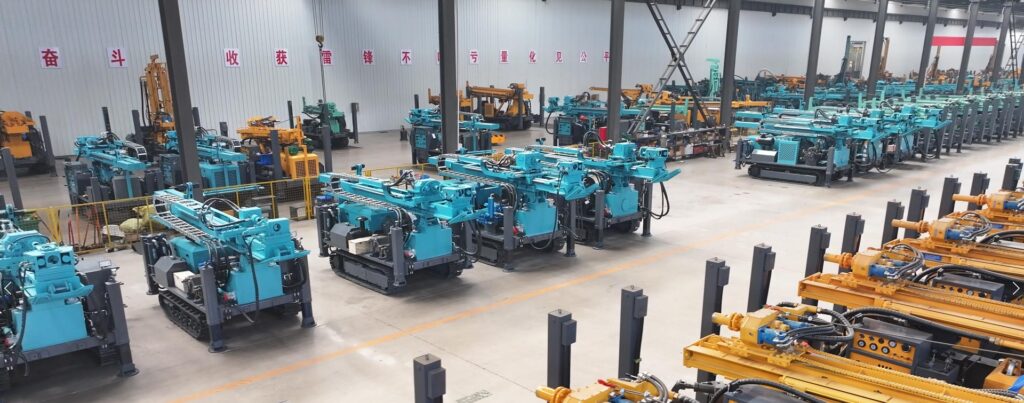
Several expenses are easily overlooked during the quotation stage. Identifying them early produces a more realistic investment budget.
Pneumatic and DTH drilling require enough air pressure and volume for the selected hammer, bit size, depth, and formation. An undersized compressor can reduce penetration speed and increase fuel consumed per meter.
Confirm whether the proposed compressor is included and whether its output matches the drilling package.
Drill rods, adapters, hammers, and bits must use compatible sizes and thread standards. A mismatch may require extra adapters or replacement tooling.
Buyers should request a complete tool connection diagram before shipment.
Even a correctly specified machine may perform poorly when operators do not understand hydraulic settings, feed pressure, flushing, and routine inspections. Training can reduce avoidable wear and improve productivity.
Operating and maintenance manuals should be available in a language the team can use effectively.
Machine compliance requirements differ among markets and applications. Buyers should verify guarding, emergency stops, lighting, warning labels, operator protection, and required documentation.
For relevant rock-drilling applications, the ISO information on rock drill rig safety requirements provides useful context. The buyer must still confirm the standards and regulations applicable in the destination country and to the specific rig type.
A vague request such as “How much is a drilling rig?” rarely produces a useful answer. Suppliers need technical and commercial details to recommend the right configuration.
Include the following information in your inquiry:
Request an itemized list covering the base machine, engine, rods, bits, pumps, tools, accessories, manuals, training, and spare parts.
Ask the supplier to explain the recommended drilling method, torque, air or mud requirements, and suitable tooling. The answer should be based on project conditions rather than depth alone.
A practical spare-parts package may include filters, seals, hoses, wear components, lubricants, and application-specific items. The recommended list should reflect expected working hours and local parts availability.
Reducing cost does not always mean selecting the least expensive machine. Better equipment matching, maintenance planning, and operator control often create greater savings.
An undersized drilling rig machine may work continuously at its limit, increasing wear and slowing production. An oversized machine can create unnecessary fuel, transport, and capital expenses.
Choose enough capacity for the most demanding expected conditions, with a reasonable operating margin.
Regular inspection of filters, fluids, hoses, fasteners, tracks, and drilling tools can identify small problems before they become major failures. Maintenance intervals should follow the manufacturer’s instructions and actual job-site conditions.
Records also help managers identify recurring faults and forecast parts demand.
Track fuel, labor, tooling, maintenance, and meters completed for each project. This reveals whether a cheaper consumable or faster operating setting truly reduces cost.
Production data also improves future equipment selection and project pricing.
Contractors operating several machines may benefit from common engines, filters, rod sizes, and hydraulic components. Standardization can simplify training and reduce spare-parts inventory.
However, it should not force unsuitable equipment into specialized projects.
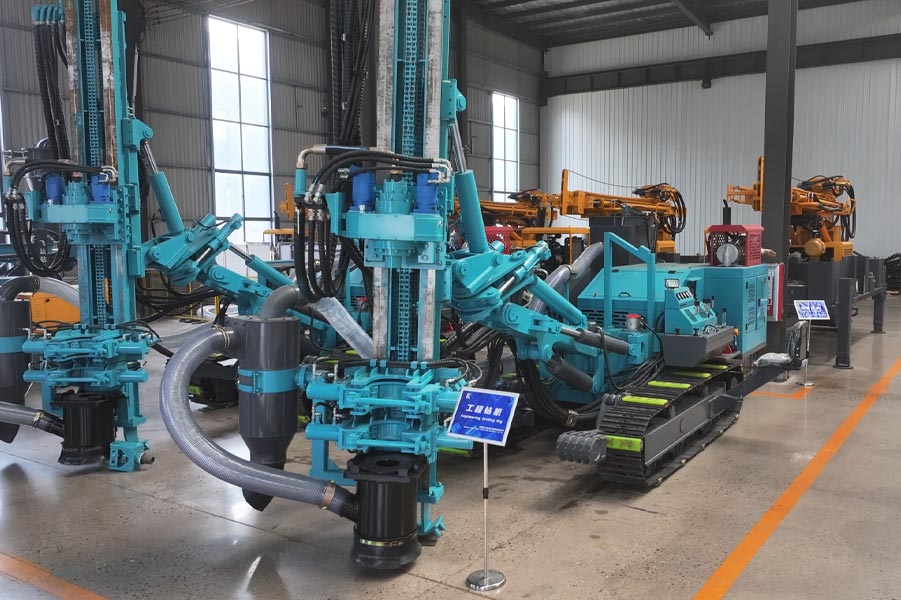
A cost-effective purchase begins with the borehole, geology, and job-site conditions. Only after defining these requirements should buyers compare equipment prices.
Yijincheng offers several configurations for water wells, construction, exploration, and trenchless applications. Buyers can explore the available drilling rig solutions or review this hydraulic well drilling rig selection guide before requesting a project-specific recommendation.
For a meaningful comparison, ask every supplier to quote the same technical scope, accessories, delivery terms, documentation, training, and spare-parts package.
The cost depends on drilling depth, hole diameter, geological conditions, power, chassis, drilling method, accessories, and shipping destination. A project-specific quotation is more reliable than a broad online price range.
Maximum depth does not show the complete capability of a rig. Torque, lifting force, feed system, structural strength, pump capacity, component quality, safety equipment, and included tooling may differ significantly.
It can be when the machine must work on rough, muddy, or uneven terrain. Better access and stability may increase productive working time and reduce the need for additional towing or ground preparation.
Not always. Some quotations include only the rig, while the compressor, DTH hammer, drill rods, and bits are priced separately. Ask for an itemized scope before comparing offers.
It can be if the machine drills slowly, consumes excessive fuel, wears tools quickly, or experiences frequent downtime. Compare expected cost per drilled meter and total ownership cost instead of relying only on the purchase price.
New equipment is often preferable for continuous commercial work, customized requirements, and buyers needing warranty support. Used equipment may suit experienced teams that can inspect, repair, and source parts for the selected model.
Provide drilling depth, hole diameter, formation, application, drilling method, terrain, expected output, preferred power source, required accessories, and delivery location. Photos, geological reports, and nearby well records can improve the recommendation.
Check whether it covers the machine, power unit, rods, bits, adapters, compressor or pump, standard tools, spare parts, documentation, training, packaging, freight terms, and warranty. Compare all offers using the same checklist.
Add fuel or electricity, labor, drilling tools, consumables, scheduled maintenance, repairs, mobilization, and downtime. Divide the result by completed meters or productive operating hours to compare performance.
The machine must match the geology and required borehole. A drilling rig machine that cannot perform efficiently in the actual formation will not be economical, regardless of how low its initial price appears.